Reflections and Rejuvenation: Journey to Tunganath and Chandrashila via Deoriatal – where nature, mythology, and thrill converge
Preface
As I stand at the threshold of fifty years, I find myself reflecting on the many folds of life I have experienced. Each chapter has brought its own challenges and triumphs, shaping me into the person I am today. With a renewed focus on mental health and well-being, I embarked on a journey to rejuvenate my spirit and reconnect with nature.
Last year, I completed the invigorating trek to Beas Kund, a journey that tested my physical limits and rewarded me with breathtaking views and profound moments of introspection. This year, I have set my sights on Tunganath and Chandrashila, destinations that have been on my list since childhood.
This story is a reflection of the resilience of the human spirit, uplifted and strengthened by the profound spiritual energy of the place. Through this journey, I hope to inspire others to embrace their own paths of self-discovery and adventure, and to prioritize their mental health as they navigate the complexities of life.
About the place
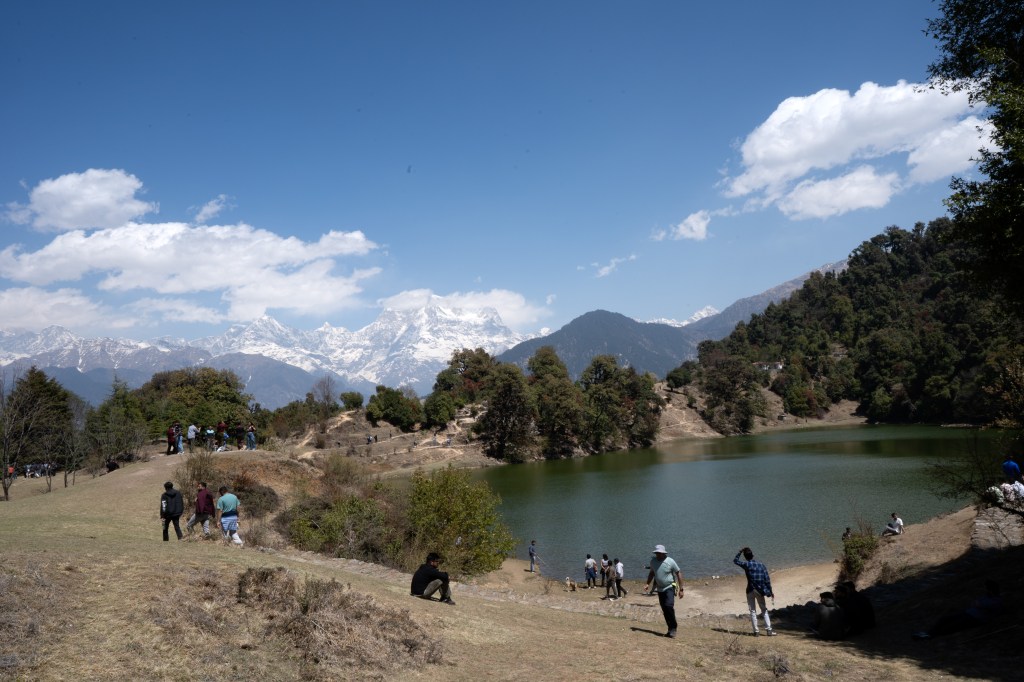
Deoriatal – also known as Devariya Tal, is a lake filled with ancient stories and legends. According to local legends, the Pandavas from the Indian epic Mahabharata visited Deoriatal during their exile. One significant story involves a Yaksha (a nature spirit) who challenged the Pandavas with a series of questions. Ignoring the Yaksha’s warnings, all the brothers except Yudhishtir drank from the lake and died. Yudhishtir answered the Yaksha’s questions correctly and revived his brothers.
Another myth suggests that the lake was created by Bhima, the mightiest of the Pandavas, because he was thirsty and couldn’t find water. Additionally, Deoriatal is believed to be the bathing place of the gods, with some ancient Hindu texts referring to it as ‘Indra Sarovar’.
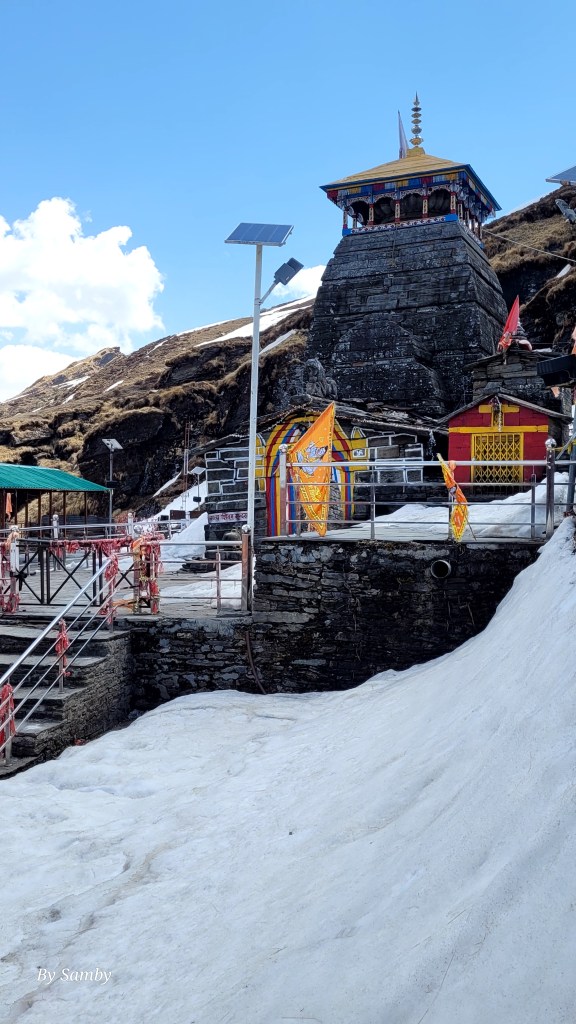
Tunganath – One of the Panch Kedar temples dedicated to Lord Shiva and is closely connected to the epics of the Mahabharata and Ramayana. After the battle of Mahabharata, the Pandavas sought forgiveness from Lord Shiva for killing their relatives. Shiva, disguised as a bull, hid in the Himalayas. His body parts appeared at five different places, now known as the Panch Kedar temples. Tunganath is where Shiva’s hand emerged.
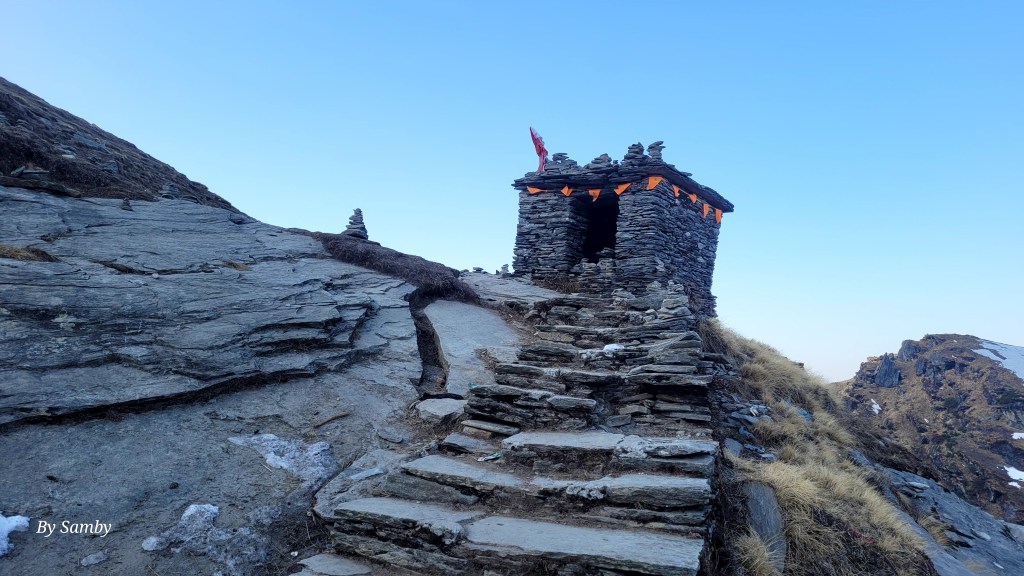
Chandrashila – Meaning “Moon Rock,” holds deep mythological significance. According to legends, Lord Rama meditated here after defeating Ravana. Another legend states that the moon god, Chandra, spent time here in penance, which is how the place derived its name. The summit offers a panoramic 360-degree view of the Himalayan range, including peaks like Nanda Devi, Trishul, Kedar Peak, Bandarpunch, and Chaukhamba.
Getting ready to embark on the path ahead
I enthusiastically registered for the trek well in advance with my favorite trekking company, renowned for its strong safety protocols and experienced leaders. This time, however, the journey felt even more special—an old friend (Sambarta Chattopadhyay) decided to join me, adding a layer of nostalgia and shared adventure to the experience.
Preparing for a Himalayan trek requires both cardiovascular endurance and muscle strength, so I made sure to train consistently. My routine included walking 10 km, 3–4 times a week, complemented by yoga and light weight training. While this regimen had served me well in my previous trek, I knew there were areas I could improve—especially for the demanding summit day.
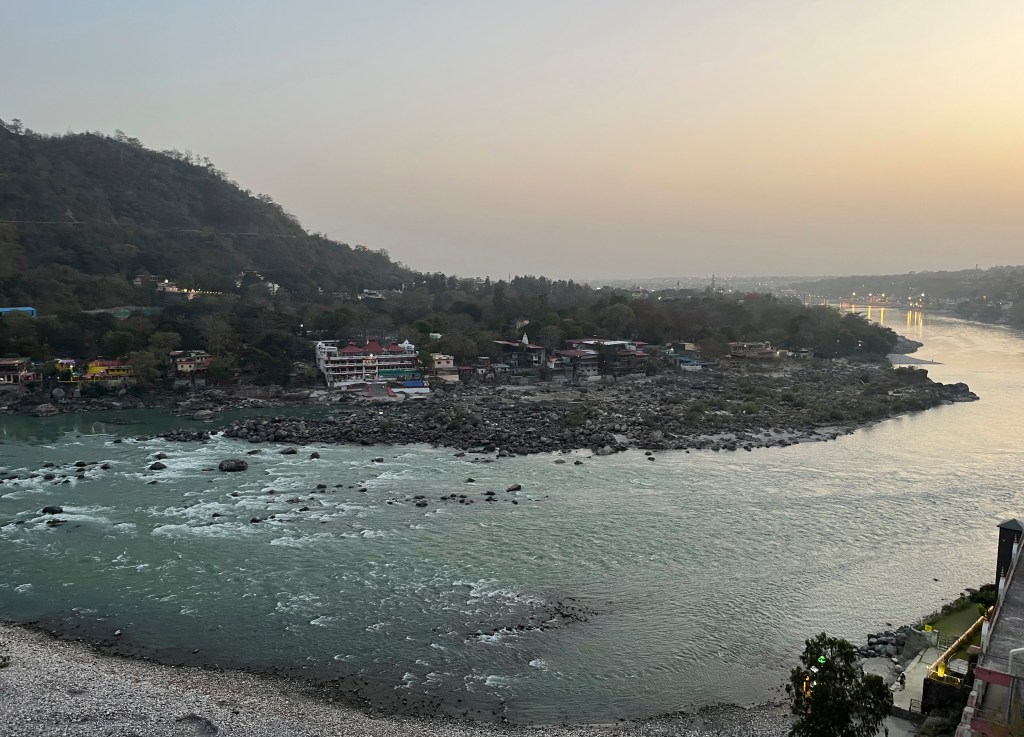
To ensure a seamless beginning to our adventure, we planned to arrive in Rishikesh a day early, reaching on the evening of March 28th via Dehradun. We checked into a recommended hostel; a cozy retreat nestled amidst the bustling energy of the town. The evening was spent strolling along the Lakshman Jhula, watching the river shimmer under the golden hues of sunset, and soaking in the tranquil atmosphere that Rishikesh is known for.
On March 29th, we had a full day to adjust to the altitude before starting our trek. With extra time, we took a nostalgic trip to Haridwar, a city rich in tradition and devotion. Walking through its old streets, childhood memories came flooding back—family visits, the sound of temple bells, and the magical view of Har Ki Pauri.

Seeking a deeper connection to the place, we ascended the steps to Mansa Devi Temple, a respected shrine on the Shivalik Hills standing 178 meters (584 feet) above the base. The climb, though modest compared to the trek ahead, served as the perfect warm-up, preparing our legs for the journey while immersing us in the spiritual energy of the land.

Day 1 – Rishikesh to Sari: The road to adventure begins!
March 30th – At 7:30 AM, we gathered outside the hostel in Rishikesh, ready to embark on our journey. The team slowly assembled, exchanging greetings and eager smiles, each person bringing their own energy to the adventure ahead. Within moments, we were on the move, boarding two tempo travelers, the hum of engines signaling the beginning of an unforgettable trek.
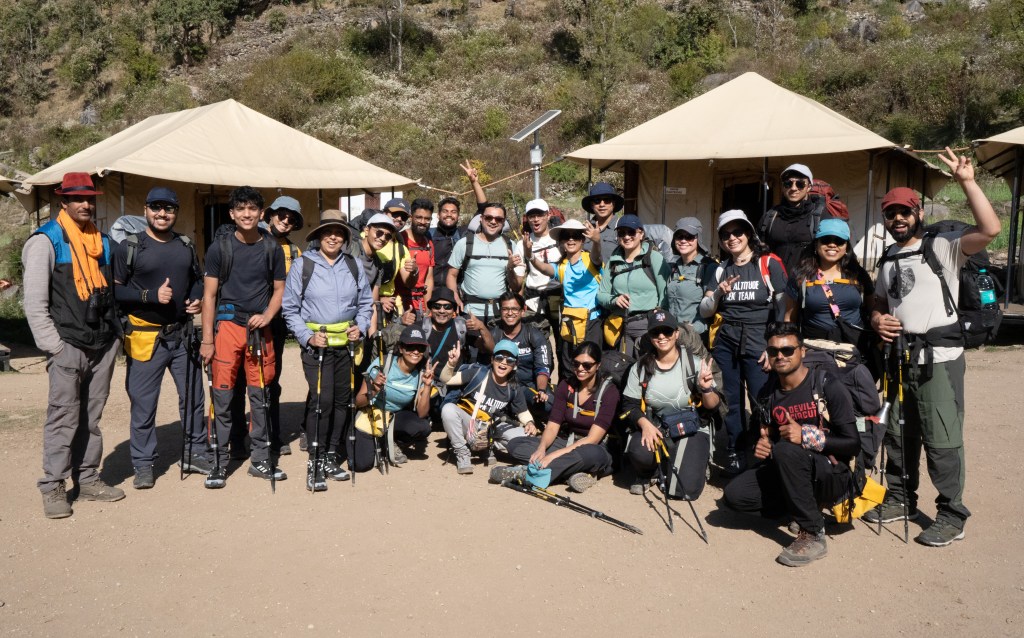
As the journey unfolded, we made time for breakfast and lunch along the way, fueling ourselves for the road ahead. The drive was more than just a transition—it was an experience in itself.
We paused at Devaprayag, Dhari Mata Temple and Rudraprayag, each stop steeped in history and spirituality.
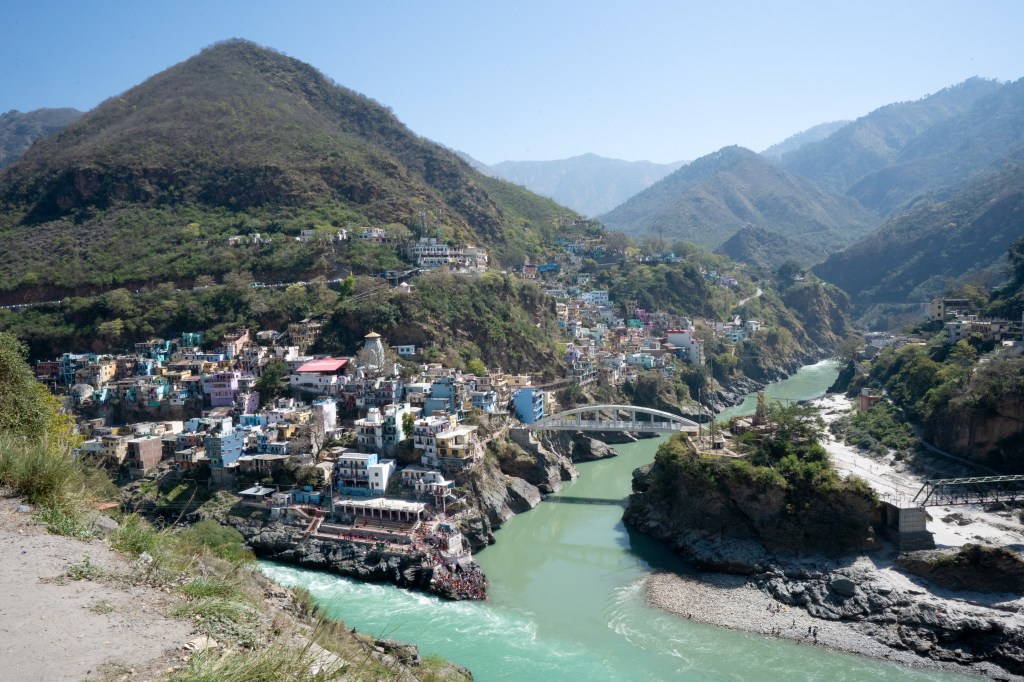
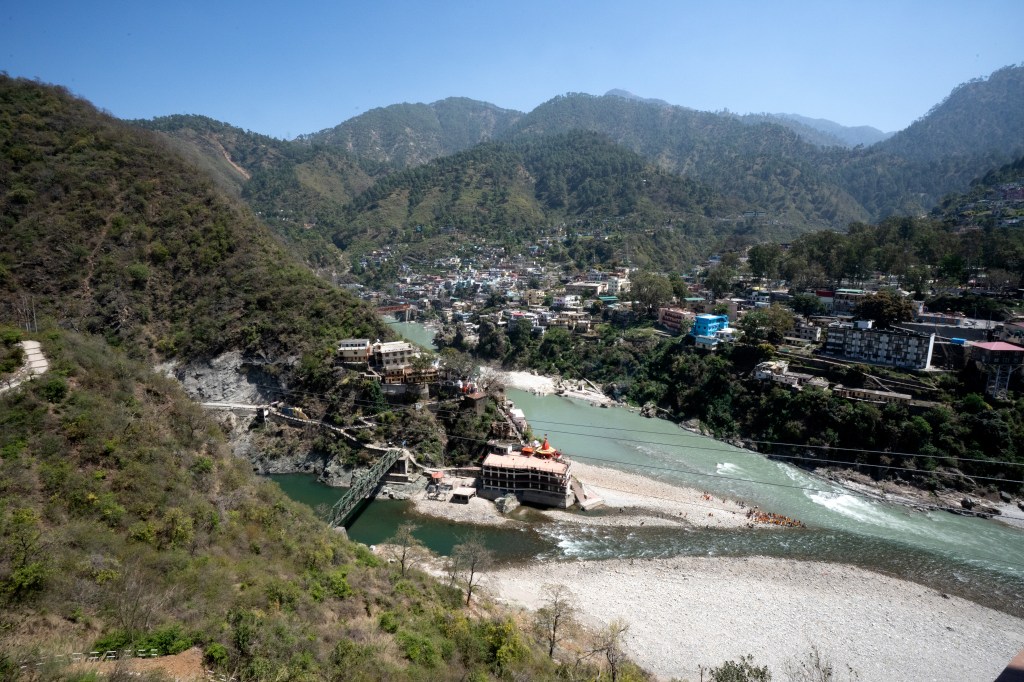
These places, where rivers converge and legends thrive, are more than just scenic spots—they are the lifeblood of our country’s heritage, whispering tales of devotion and nature’s grandeur.
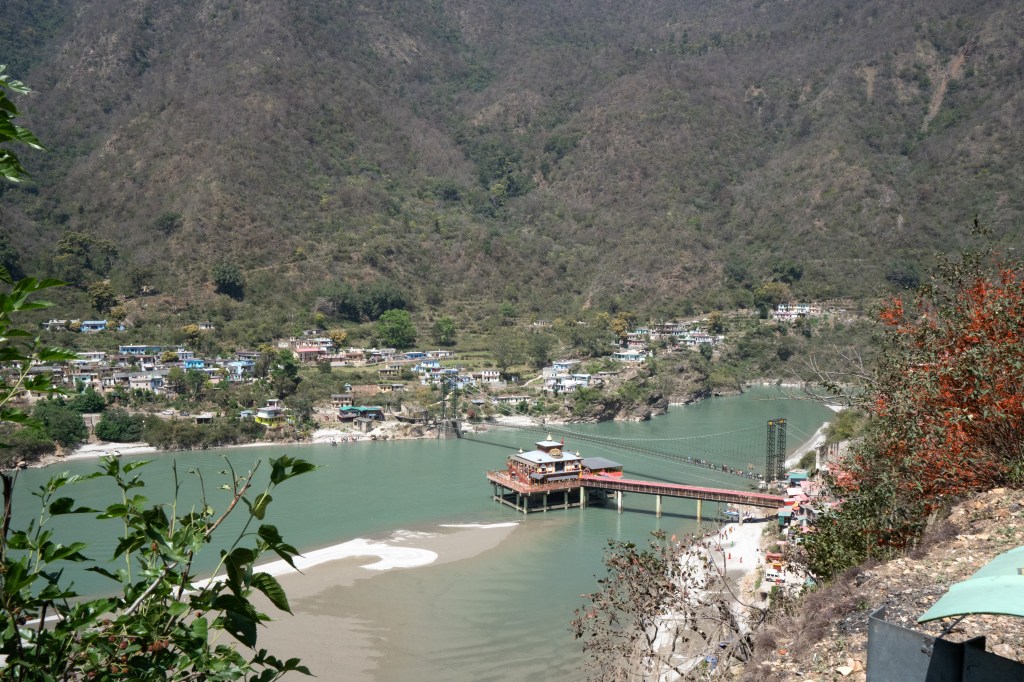
By late afternoon, we arrived at Sari village, a charming hamlet nestled in the embrace of the mountains. The final stretch led us down a narrow village road, winding gently toward our campsite, just a few meters below the valley. Sari welcomed us with its simplicity—it’s quiet lanes, its warm-hearted locals, and an atmosphere that instantly felt like home.
There are places in the world that embrace you the moment you step in, and Sari is one of them. Beyond its scenic beauty, Sari Village is a gateway to some of the most exhilarating treks in the region. It serves as the starting point for Deoriatal, Rohini Bugyal, Chopta Trek, and Bisuri Tal Trek, attracting adventure seekers and nature lovers alike. Its proximity to Chopta, often referred to as the ‘Mini Switzerland of Uttarakhand,’ further enhances its appeal as a trekking destination.
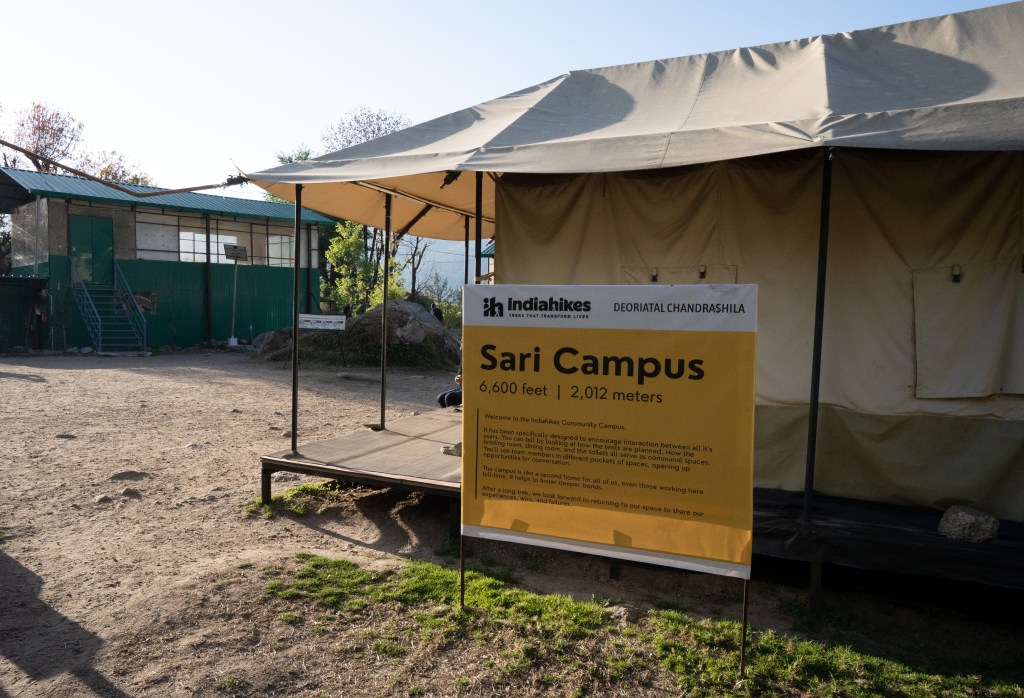
One of the most enchanting features of Sari Village is its apple and peach orchards, spread across rolling meadows with the majestic Himalayas forming a breathtaking backdrop. The villagers primarily engage in farming, livestock rearing, small businesses, and tourism, preserving their traditional way of life.
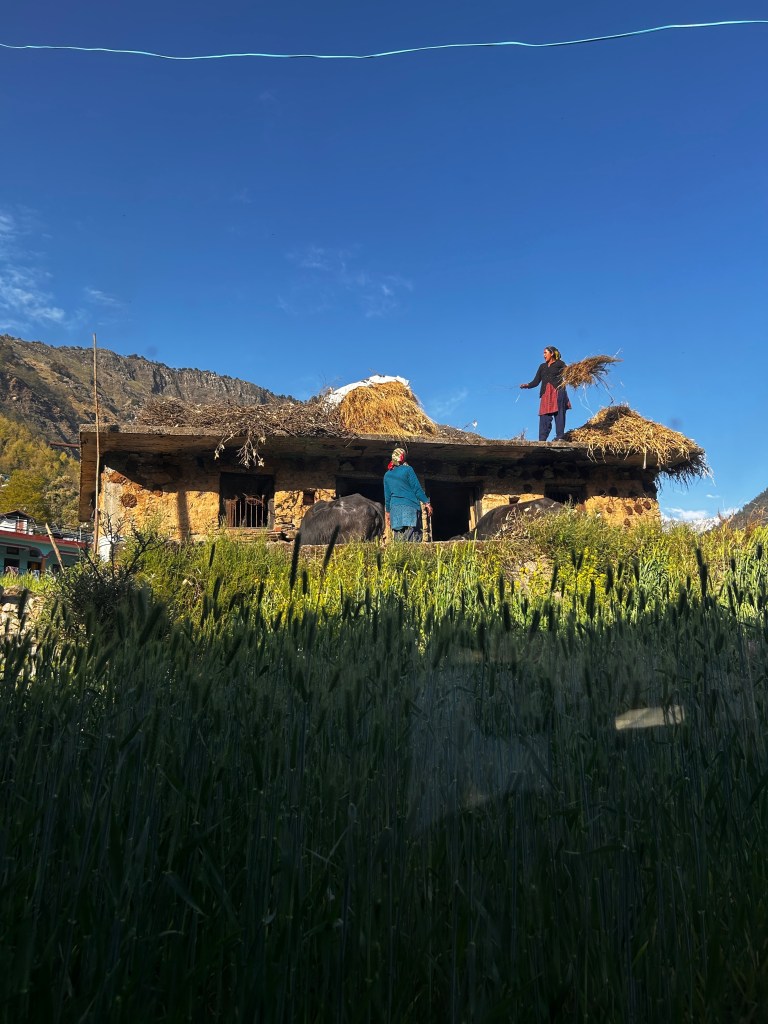
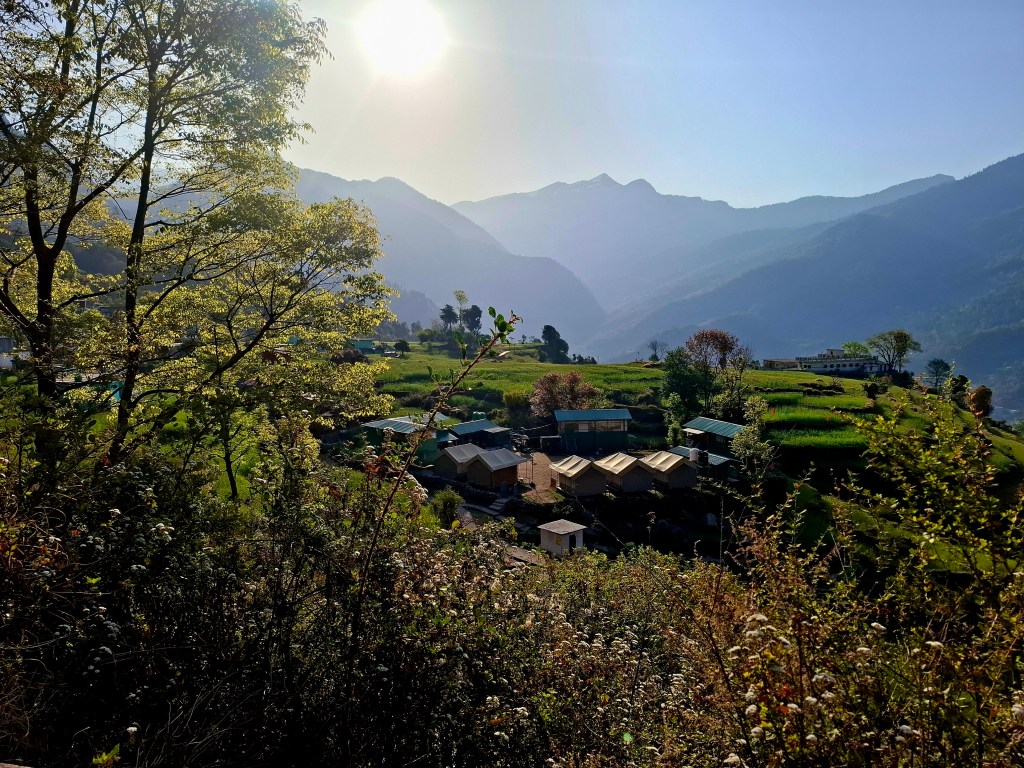
Unlike many tourist destinations, Sari remains largely untouched by commercialization, allowing visitors to immerse themselves in the authentic local lifestyle and culture.
The afternoon unfolded beautifully as we settled into our three Swiss tents—one reserved for the women and the other two for the boys. The fresh mountain air, the rustling of leaves, and the distant hum of village life created the perfect backdrop for the evening.
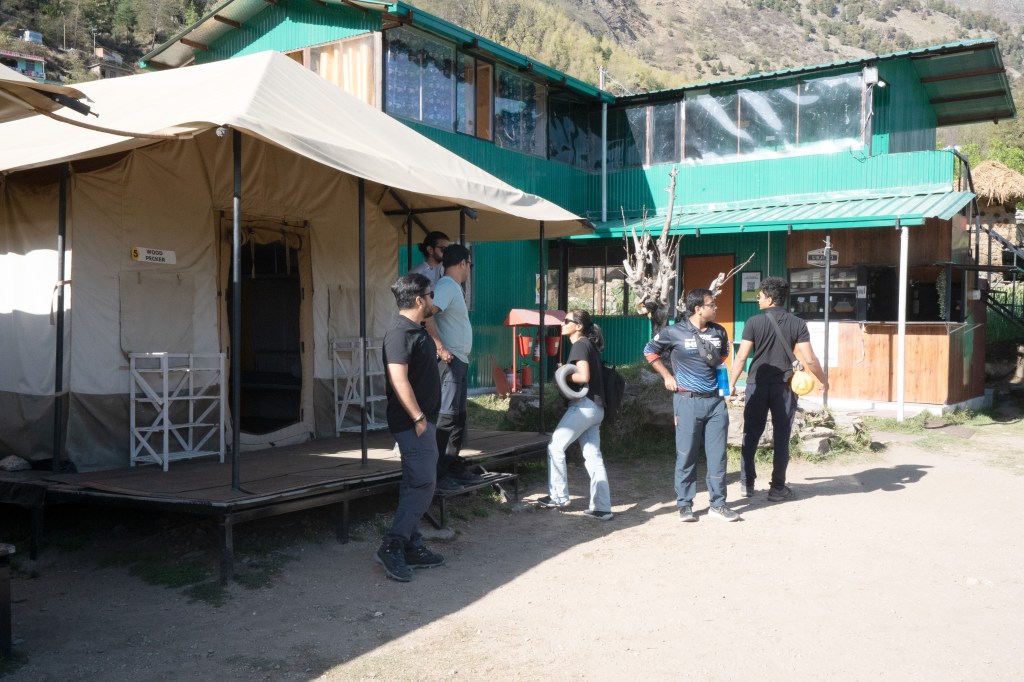

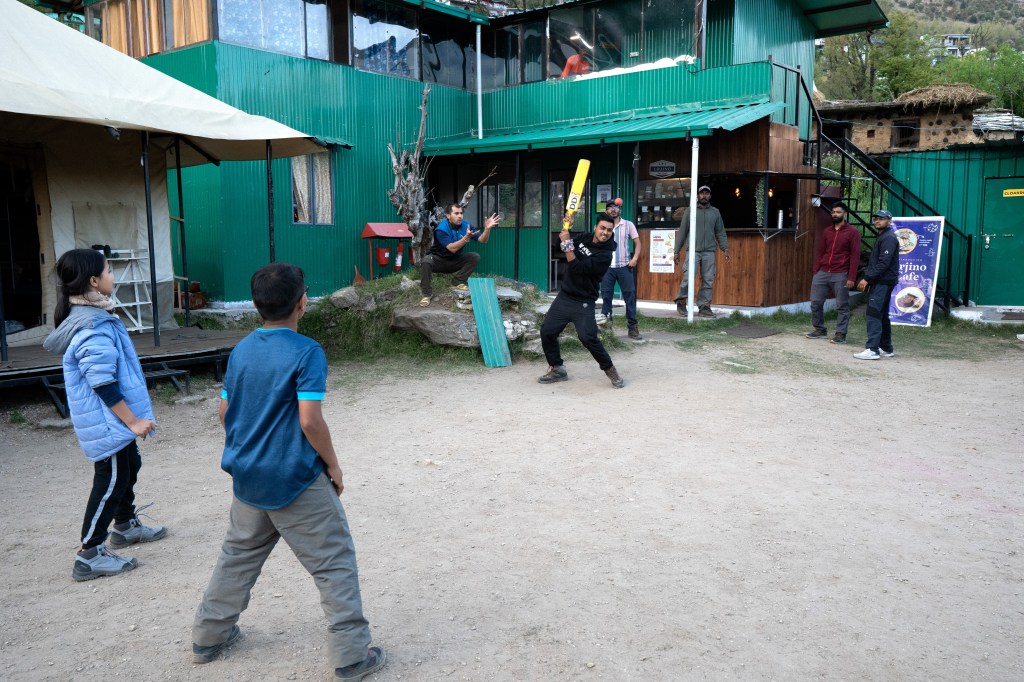
Excited to take in the beauty around us, we set out to explore the village, strolling through its peaceful lanes as the sun cast a warm golden glow. Later, back at the camp, a lively game of cricket brought fun and friendly bonding among the group.
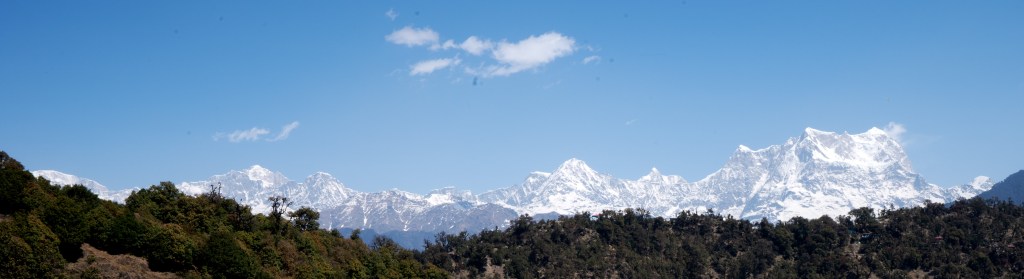
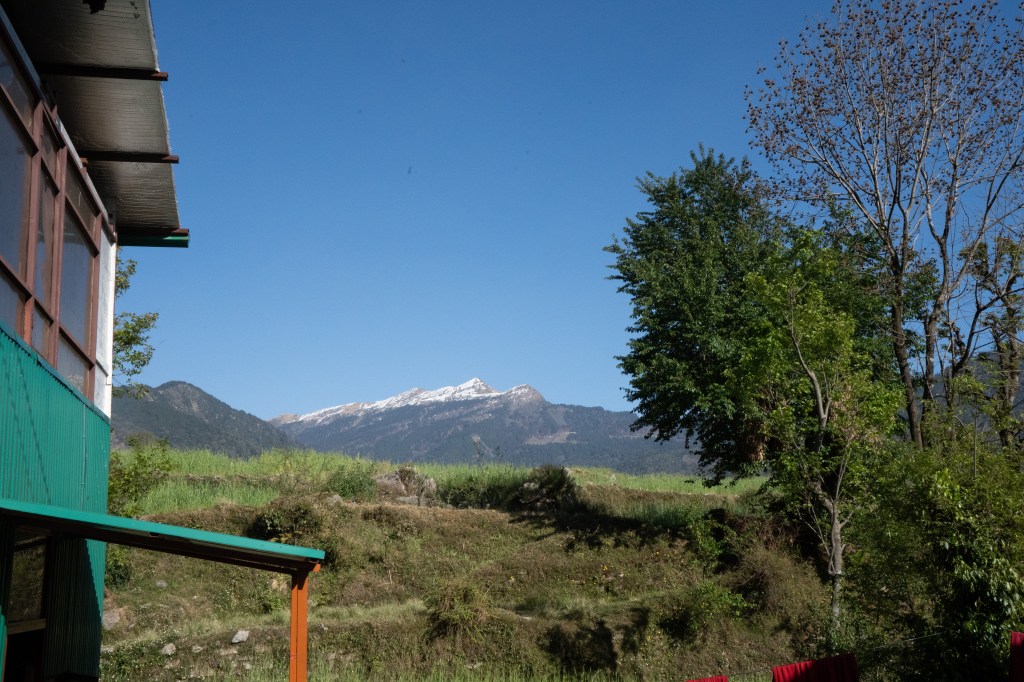
Then came an unexpected delight – Seeing the final summit on the very first day was both thrilling and humbling. It served as a powerful reminder of the challenge ahead, igniting a sense of determination within us.
As night fell, we gathered in the briefing room, where our trek leader, Arjun Sir, along with technical climbing experts Vijay and Manoj-Ji, guided us through the documentation formalities, vital checkups, and briefing. We went to bed by 9 pm after having freshly prepared nourishing dinner.
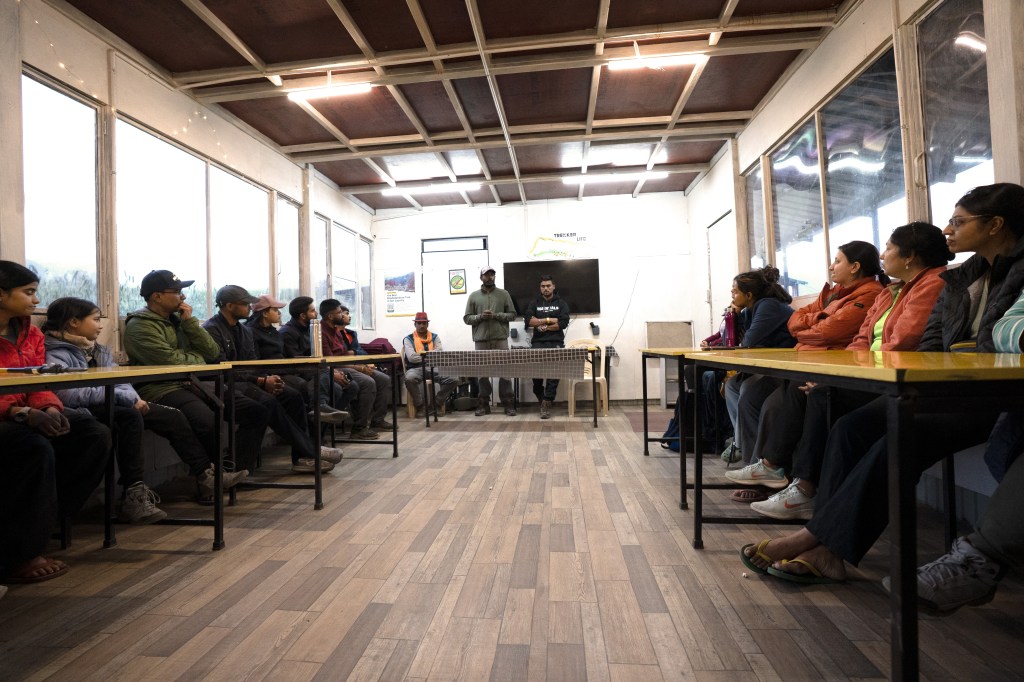
An essential step in preparing for the days ahead, the trek briefing helped us mentally and physically gear up for the adventure. We covered everything—from packing the right clothing and carrying essential gear to understanding resource management and learning how to respond to emergencies. This session ensured that we were well-equipped and confident before setting off into the mountains.
Day 2 – Sari to Deoriatal: A journey through vibrant rhododendrons to serenity!
March 31st – The morning mist hung over the campsite as we slowly woke up and stepped out of our tents. By six o’clock, the world around us was coming to life, and so were we. Breakfast was quick but satisfying, giving us the energy we needed for the day ahead.
We got ready in comfortable trekking clothes—trek pants and dry-fit attire. Our daypacks were packed with essentials like a rain poncho, medicines, some snacks, cameras, sunscreen, and two liters of water. To make sure everyone was present, we stood in a big circle and counted ourselves. Trek leaders gave us few essential lessons. Our first lesson seemed simple – tying our shoes properly. Instructor showed us the surgeon’s knot*, a special way to tie laces so they wouldn’t come undone during the trek. At first, many of us struggled, but after a few tries, we finally got it right.
*A surgeon’s knot is a strong and reliable knot used in fishing, surgery, and general knot-tying. It is an enhanced version of the square knot, with an extra loop to improve security and prevent slipping.
Next, we learned about teak poles, which help with balance on rough trails. We listened carefully as our guides explained how to use them correctly, sharing tips from their own trekking experiences.
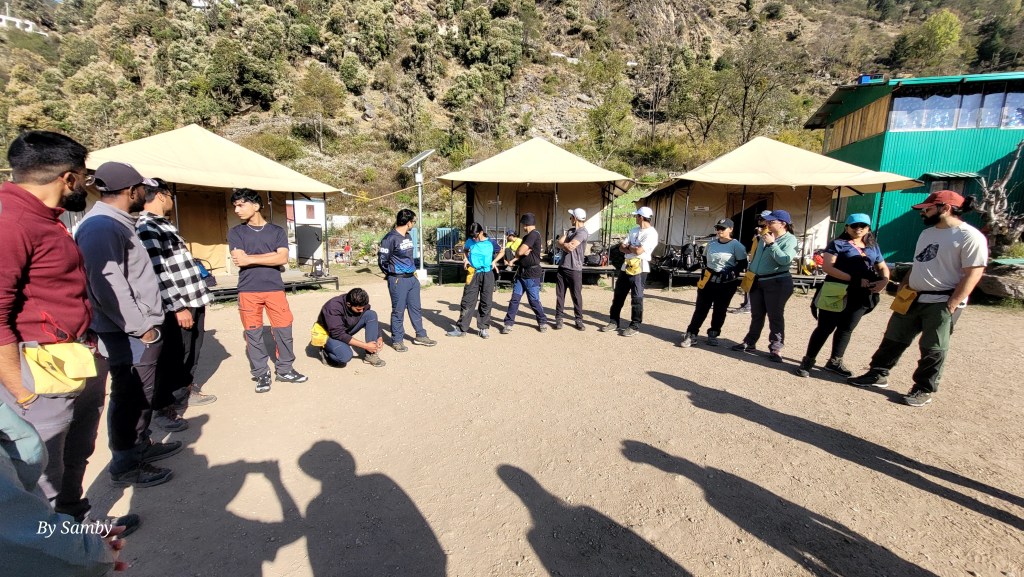
The journey begins—march with purpose – stepping away from the campsite, we retraced the familiar leftward path—the same one that guided us here the day before. Within just 100 meters, the trail shifted direction, leading us straight toward Deoriatal.

About 15 minutes into our journey, the trail met a roadhead. The view opened up, showing village houses nestled in the rolling hills.

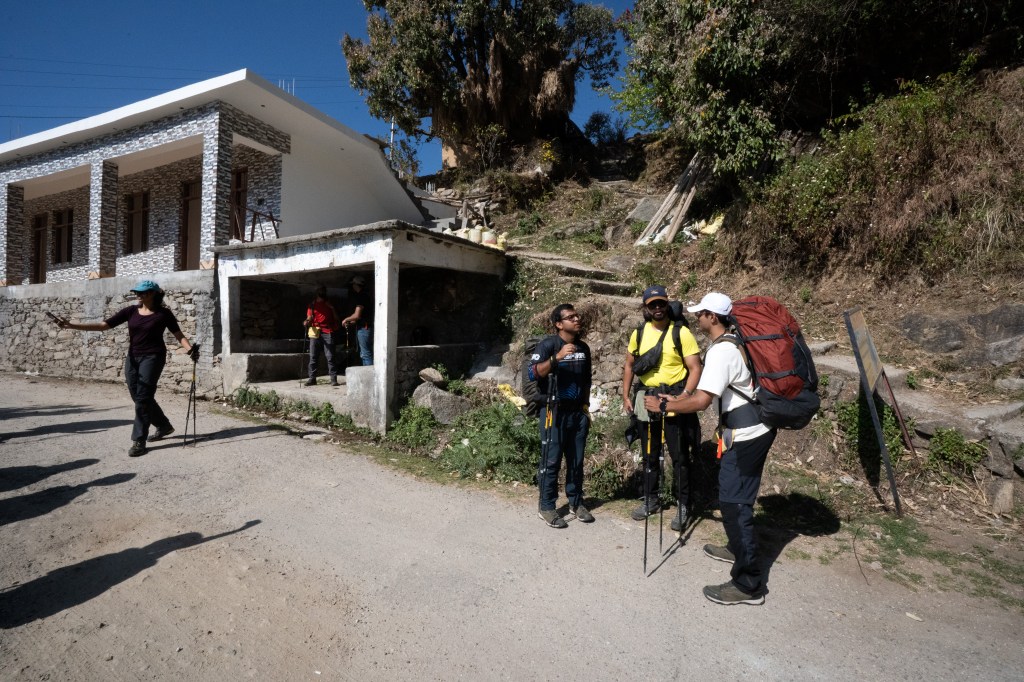
We paused, taking in the breathtaking sight—a patchwork of vast farmlands stretching endlessly, their earthy tones blending seamlessly with the green embrace of the hills.
After a challenging 45 minutes hike, the path became easier, and the stunning valley views opened up before us. In the distance, we once again caught sight of the majestic Chandrashila summit, with the sacred Tungnath temple nestled below—a breathtaking view that filled us with excitement and pride, visible only through binoculars.
Pushing forward, we followed the winding mountain ridge, climbing steadily for another 20-30 minutes until we reached Ropini Bugyal.
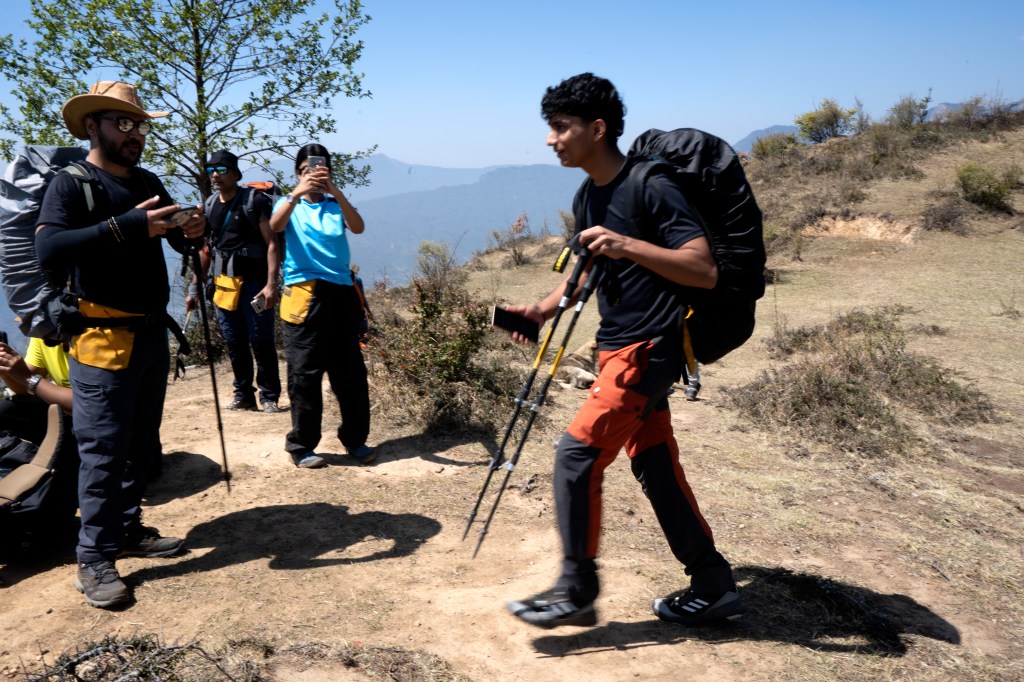
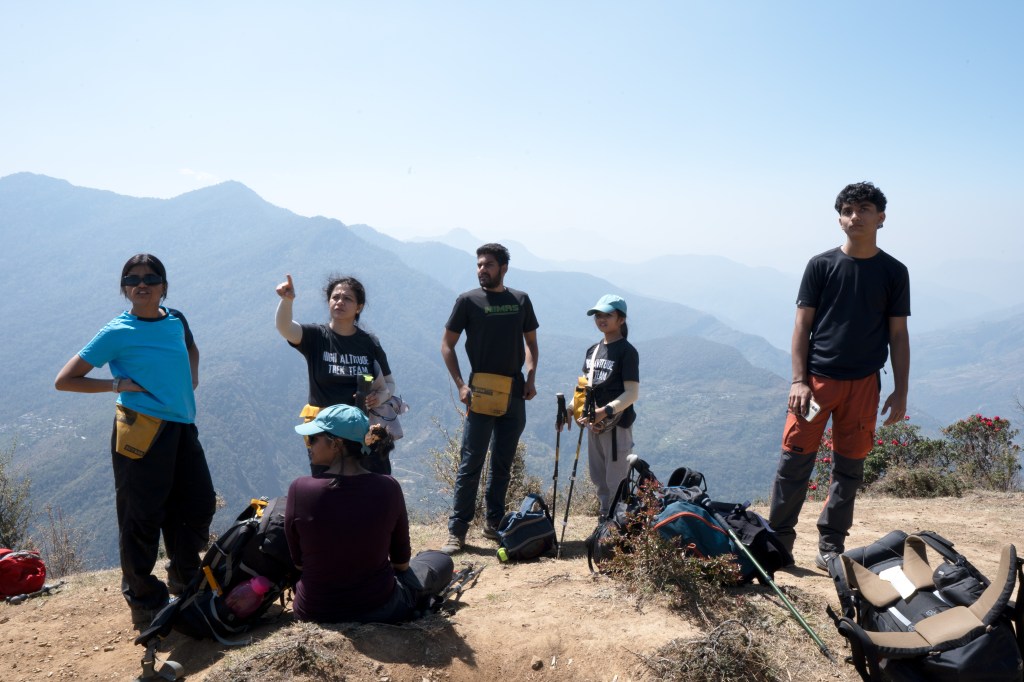
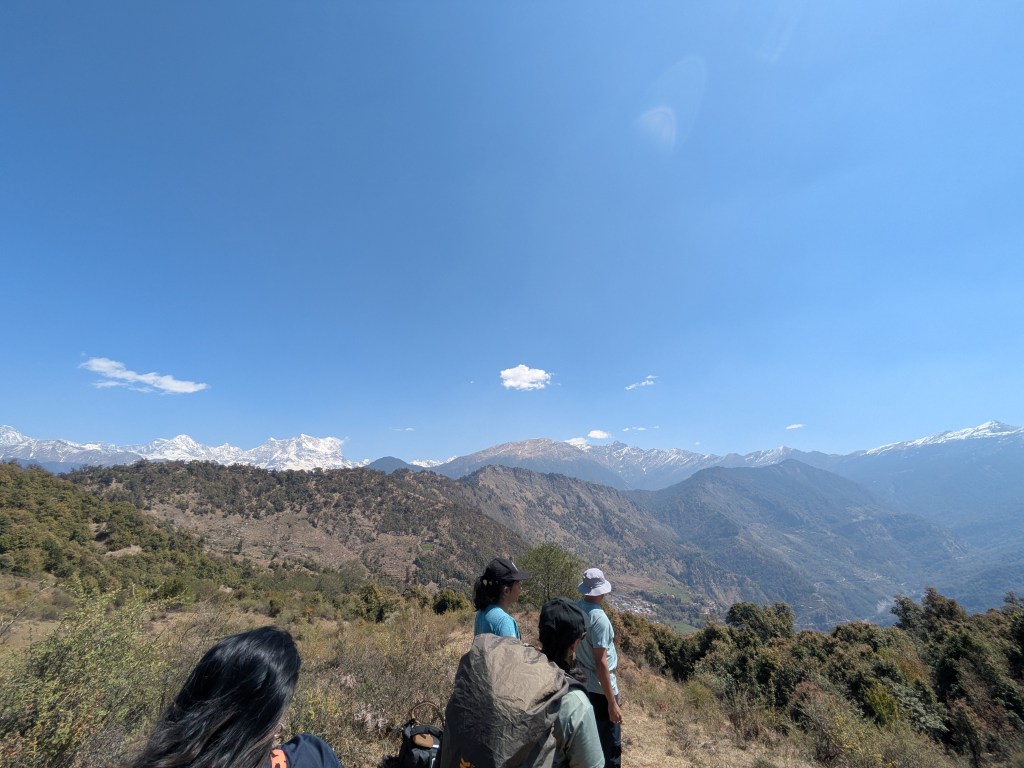
Through enchanting rhododendron and maple forests, we trekked onward, reaching another viewpoint after 10 minutes. By now, at 7,434 feet, Sari village was far behind us, and with just one kilometer left, we were closing in on our goal.
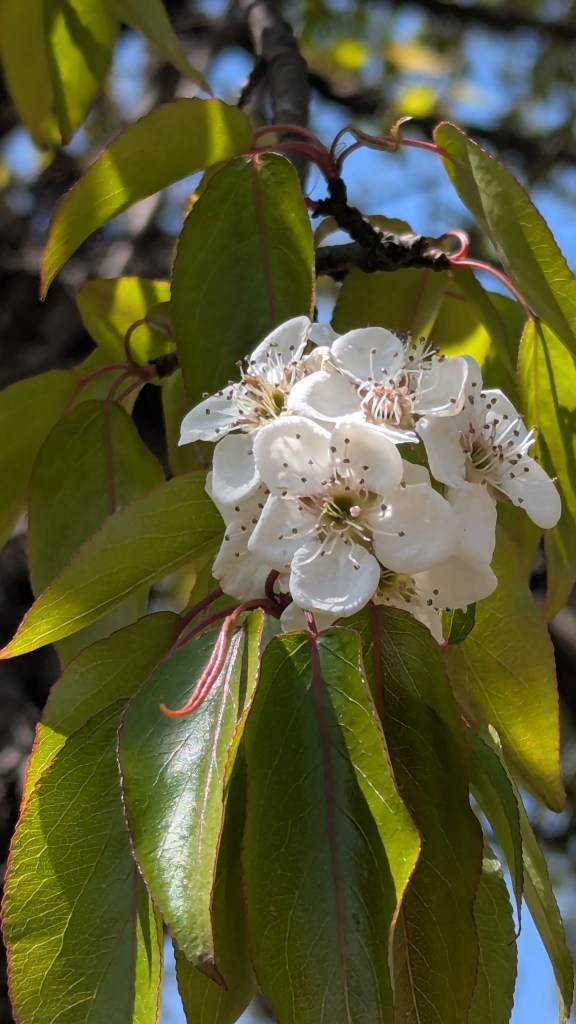
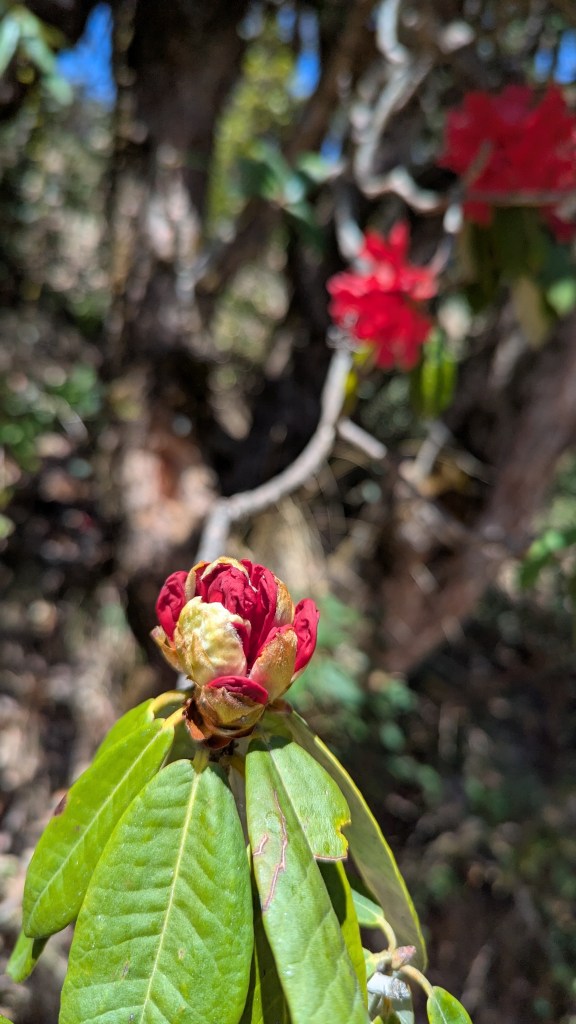
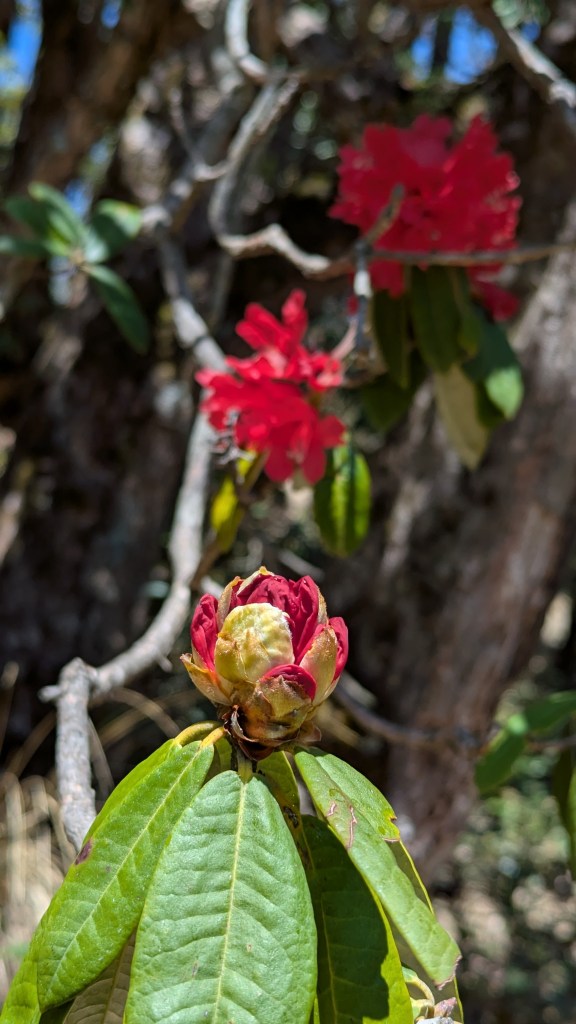
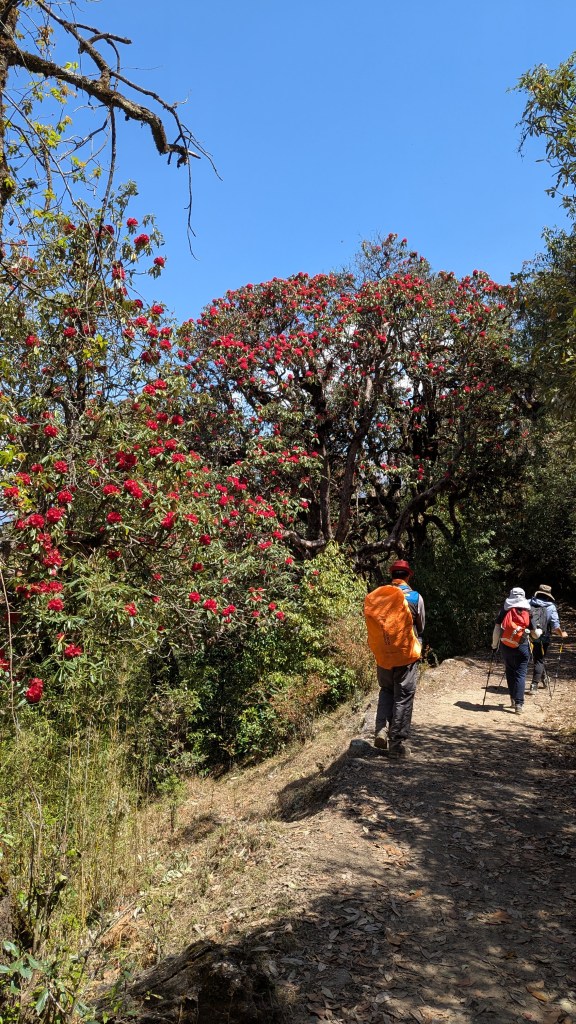
Stepping into a rhododendron forest feels like entering a dreamscape—where bursts of crimson, pink, and purple bloom like nature’s own fireworks.
Then came the final stretch of the day —a short downhill walk—and suddenly, the grand view of Deoriatal unfolded before us.
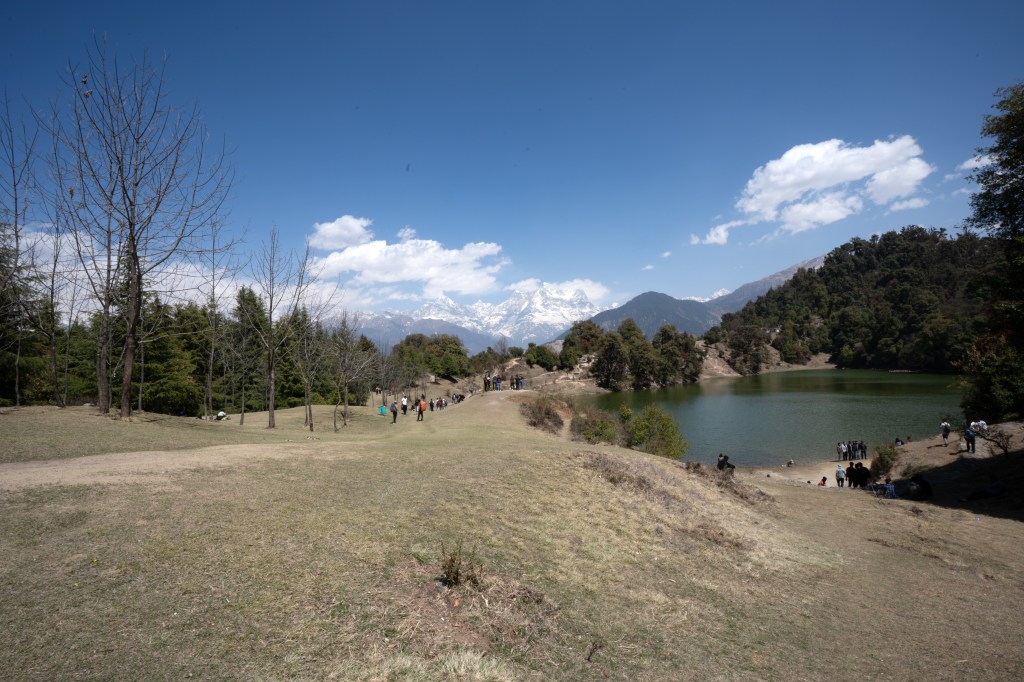
A few years ago, the Uttarakhand High Court prohibited lakeside camping at Deoriatal. Now, campsites must be set up at least 100 meters away from the lake. Our trekking organization offers a well-structured campsite featuring triple-sharing tents, a dining area, and bio-toilets. We settled in comfortably and enjoyed a delicious, hot meal, savoring the flavors of our well-earned lunch.
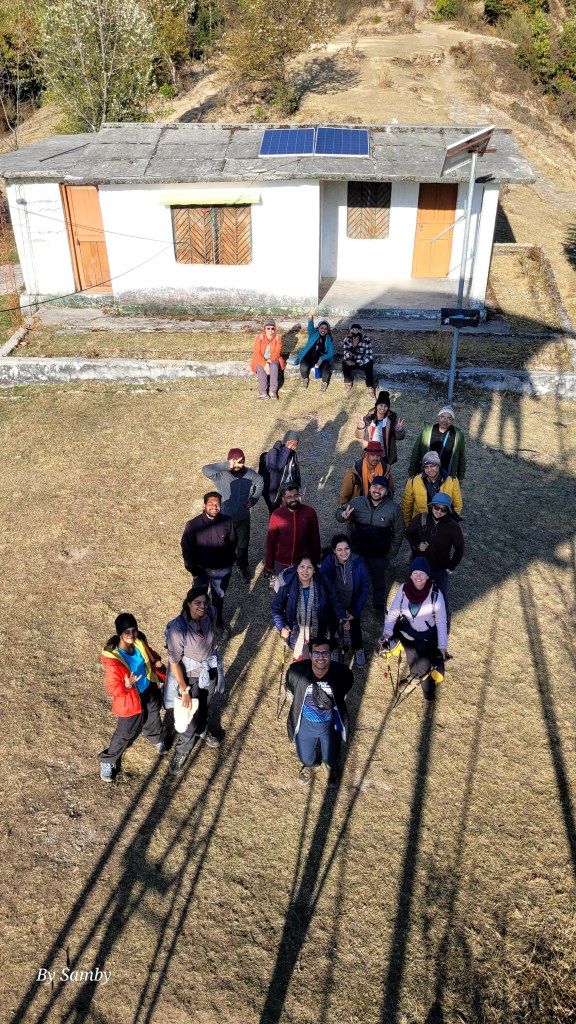
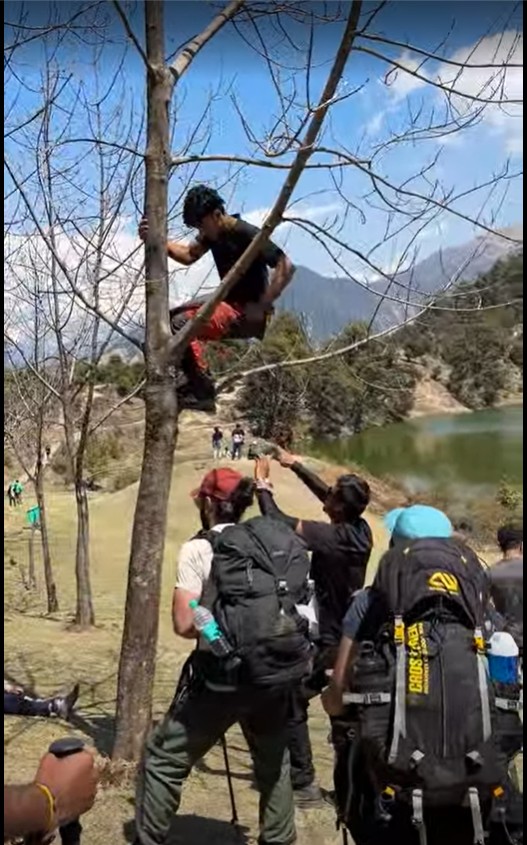
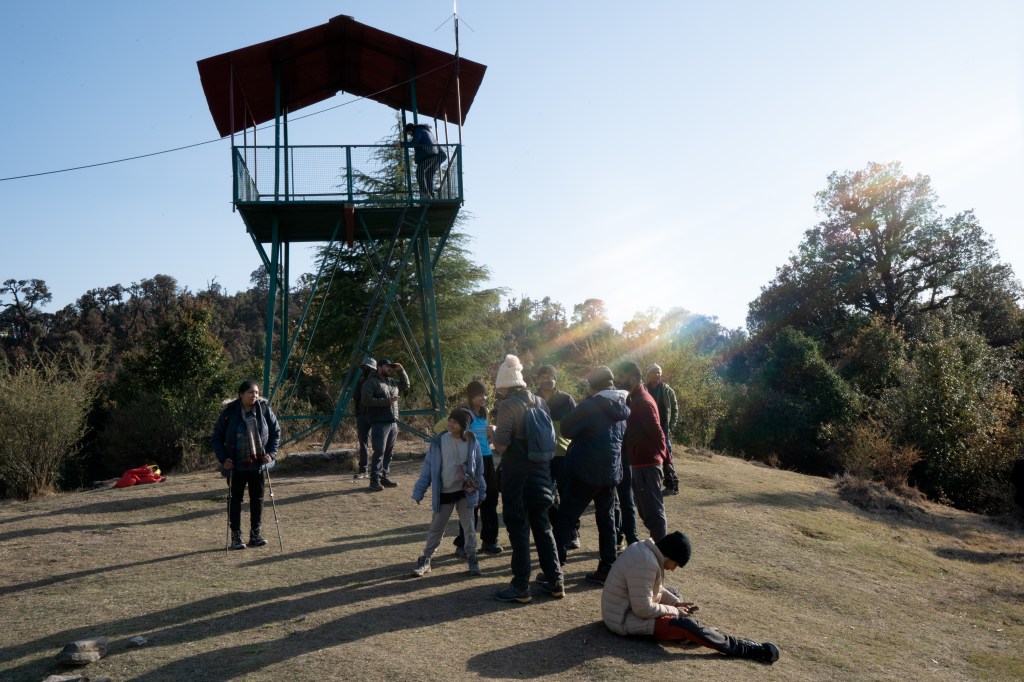
After a few hours of restful pause, we wandered towards the lakeside, where the evening unfolded in a symphony of laughter, play, and pure joy. Every moment felt precious—team games that ignited camaraderie, the sheer madness of youngsters scrambling up trees with untamed enthusiasm, and serene watch tours that let us soak in the beauty of the surroundings.
Treks like these are more than just an escape; they are a return to something raw and essential. At first, we were strangers, navigating our own paths, carrying the weight of our routines and distractions. But in the absence of artificial entertainment, something remarkable unfolds—human connections grow naturally, effortlessly, like the trees around us. We laughed, we shared, we listened, and without realizing it, we became a family, woven together by shared moments.
Sitting by the tranquil waters of Deoriatal, the evening gifted us a rare kind of magic—the kind that doesn’t demand a screen or an elaborate production. As Manoj Negi Ji brought the Mahabharata to life with his mesmerizing storytelling, we were captivated, not just by the legend but by the sheer beauty of the experience itself. In that moment, we understood something profound—this was entertainment in its purest form. No movie, no OTT series, no fleeting reel could rival the power of a well-told story shared under an open sky, surrounded by nature’s grandeur.
Perhaps this is what we have lost in our fast-paced world—the ability to simply be present, to connect deeply, and to let the world remind us of what truly matters. And yet, here, in the quiet embrace of the mountains, we found it again – We returned to our tent, enjoyed a satisfying dinner, and nestled into our sleeping bags, carrying the excitement of tomorrow’s adventure in our hearts.
Day 3 – Deoriatal to Syalmi via Rohini Bugyal : Journey through forests and meadows!
April 1st – This was my first five-day trek, and it was nothing short of transformative. Multi-day trekking is not just about covering distances—it’s an experience that challenges both body and mind. It demands mental resilience, adaptability, and above all, the ability to embrace the journey itself.
With this positive mindset, we woke up early, feeling the thrill of another day of adventure. Day 3 was set to be a long and demanding trek, with a target of covering 9+ km in about 6-7 hours. Preparing for the challenge ahead, we packed our roti and dry sabji for lunch, stocked up on trail snacks, and ensured we each carried two liters of water. By 7:30 am, we gathered outside the camp, brimming with energy, and started our warm-up exercises with great enthusiasm.
Technically, the trek from Deoriatal to Syalmi involves a 200 ft descent in altitude, but it’s far from an easy downhill walk. The route comes with its own complexities—traversing a ridge to Jhandi Top, followed by a gradual descent toward Rohini Bugyal, and then a steep drop down to Syalmi campsite. When our trek leaders first explained the day’s plan, it seemed manageable—just a long walk. But as the day unfolded, we quickly realized that what had seemed like a simple itinerary was just a teaser for the real challenge that lay ahead.
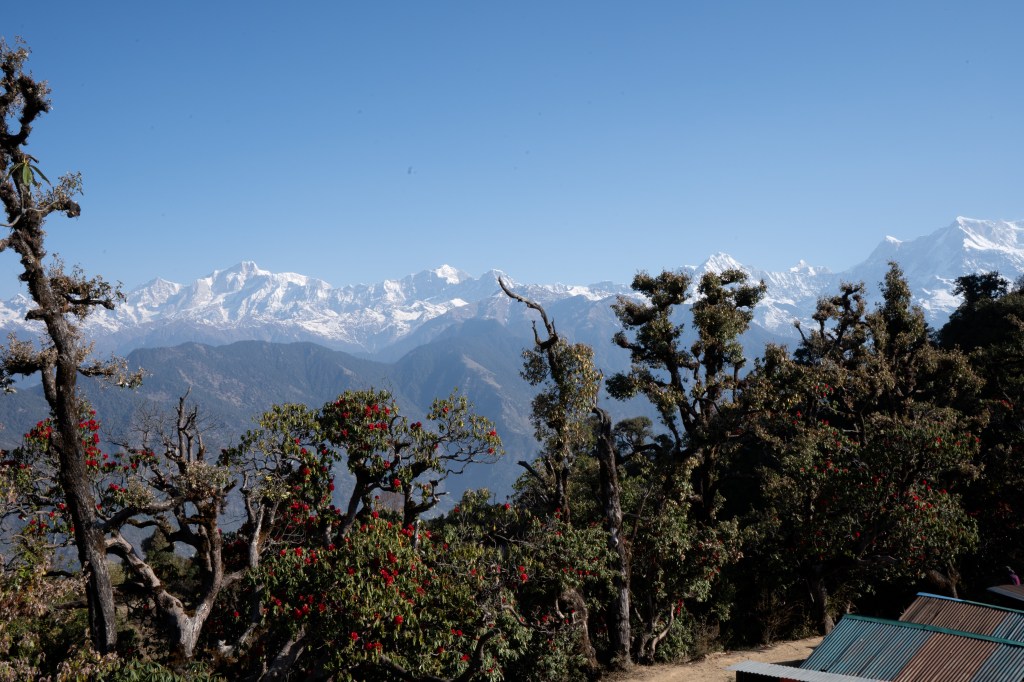
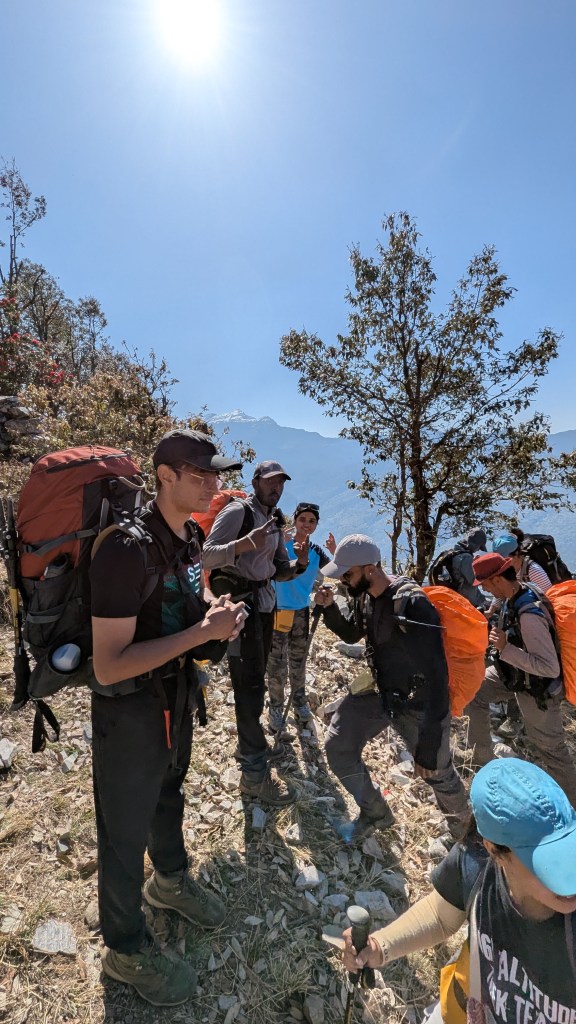
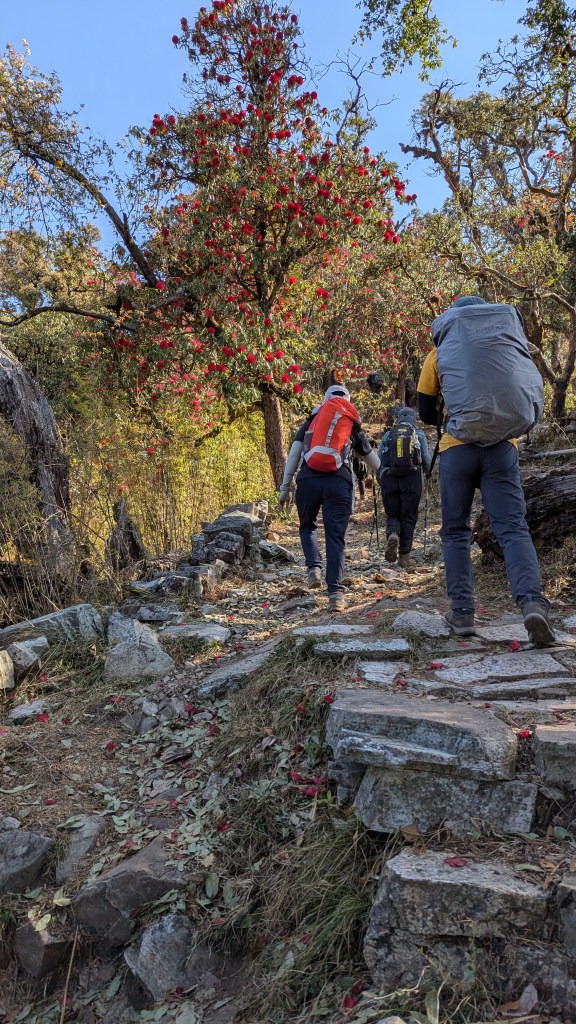
We took the ascending trail, climbing steadily as the valley unfolded around us.
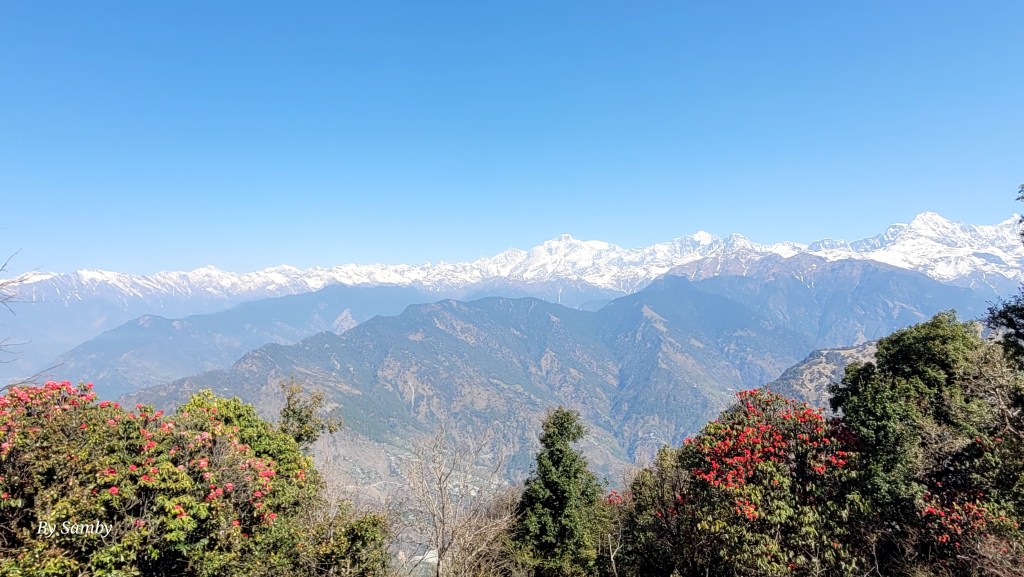
After a short but steady climb, we reached the highest nearby ridge, marked by a flag post—Jhandi Dhar, also known as Jhandi Top.
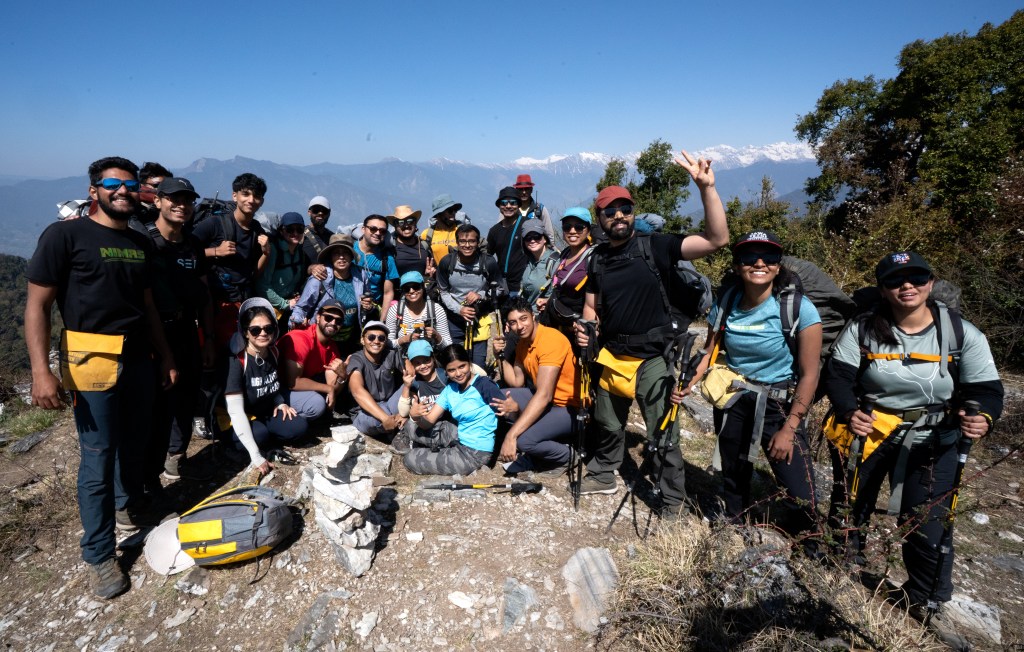
Curious about our pace, we asked our leader Manoj Ji about how we were doing in terms of timing. Without hesitation, he gave us a firm yet measured response—”We’re 30 minutes behind schedule.” The message was clear—this wasn’t a time for distractions. No unnecessary breaks, no lingering for reels or casual fun—just focus on moving forward. The real challenge had only begun.
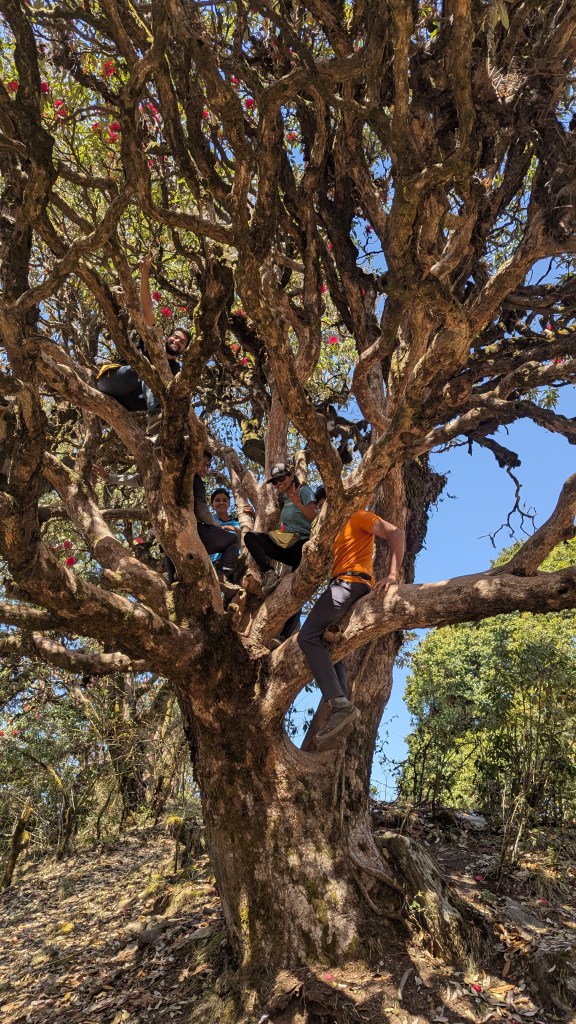
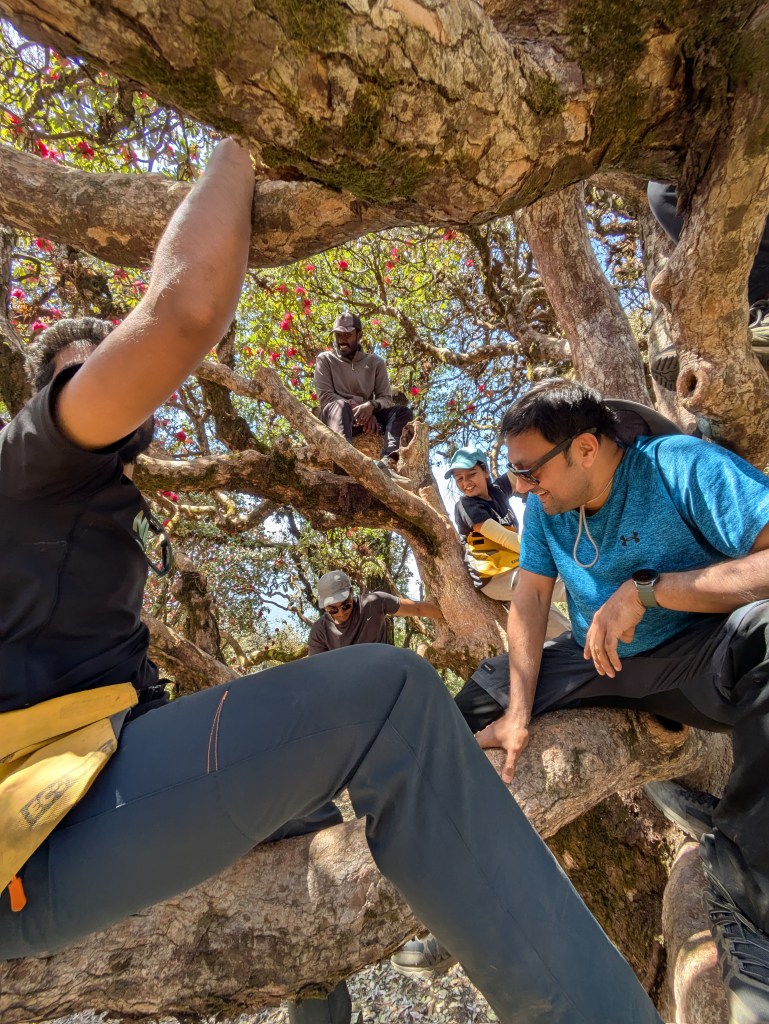
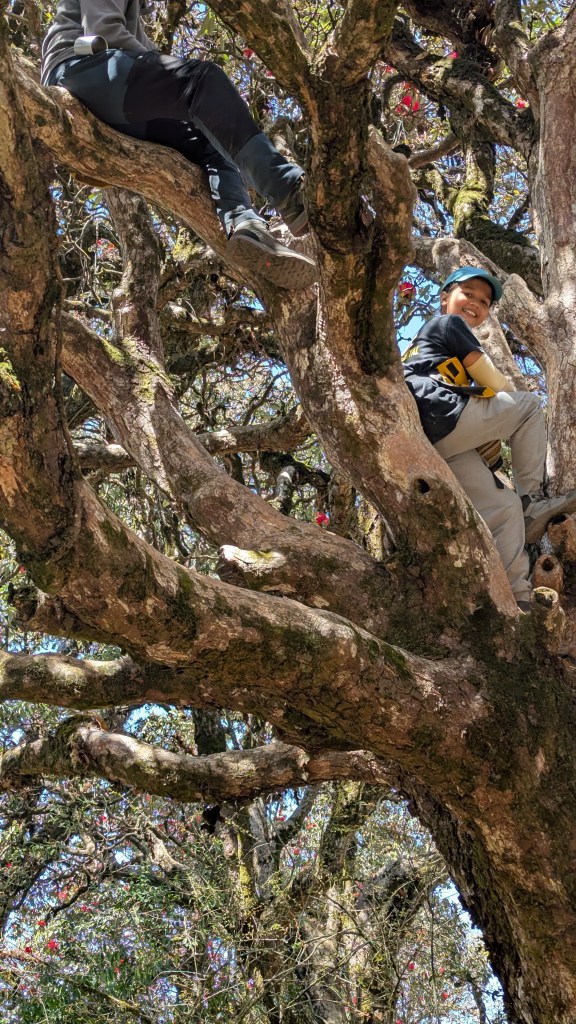
Despite the warnings, our young adventurers treated trees like a personal jungle gym, offering live proof that Darwin was really onto something.
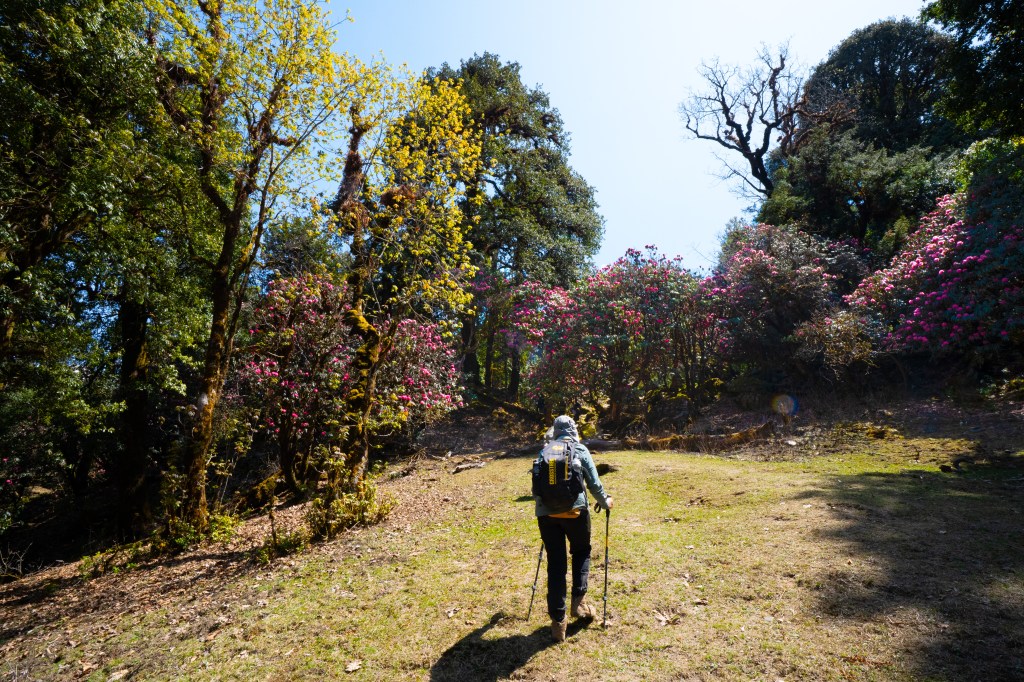
The forests ahead thickened even further, a reminder that the real adventure had only just begun. As we descended rapidly toward the forest ridge, we navigated a steep yet pleasant trail. After another 20-minute walk, we approached a junction where three trails split. We took the center trail, which ascended gradually—our path toward Rohini Bugyal.
Nestled amidst dense rhododendron forests, Rohini Bugyal felt like paradise—its serene meadows framing breathtaking views of Kedar Dome and Kala Parvat.
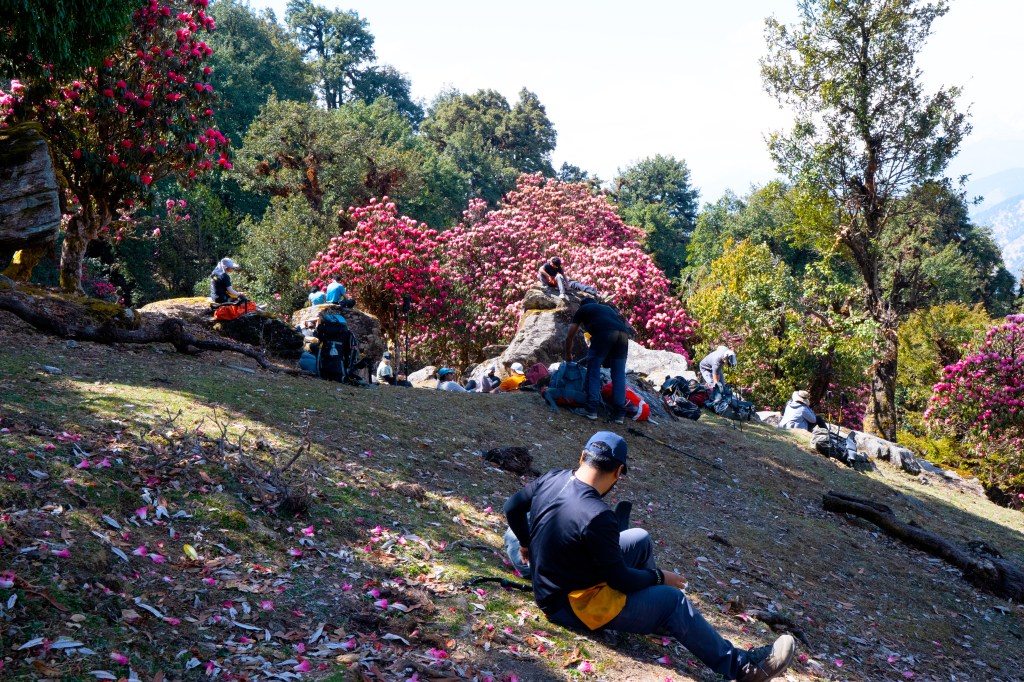
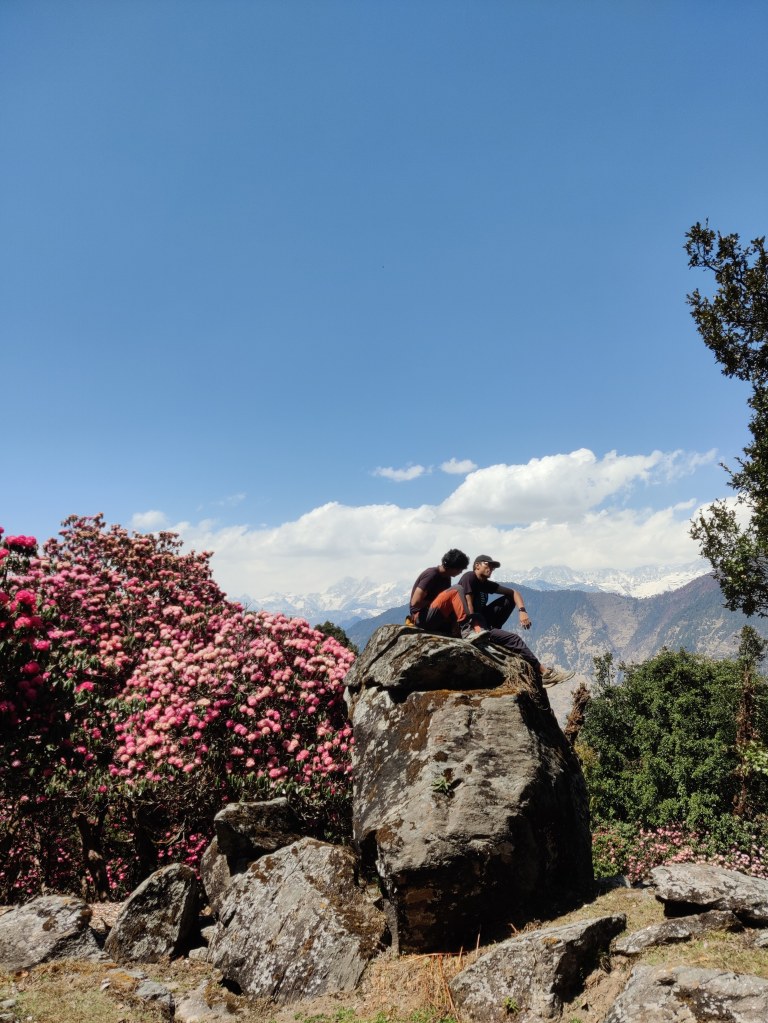

As fatigue set in, we rested beneath a rhododendron tree, savoring roti and sabji while the snowy peaks stood majestically in the backdrop. No star restaurant could rival this natural dining experience.
After lunch, we began a steep descent toward Syalmi meadow, a thriving haven for wildlife. Eyes sharp, we scanned the path for glimpses of foxes, griffons, and even snakes. With one final push, we navigated downhill for about 30 minutes, arriving at the Syalmi Campsite—our resting place for the night, where we soaked in the memories of an extraordinary day in nature’s embrace.
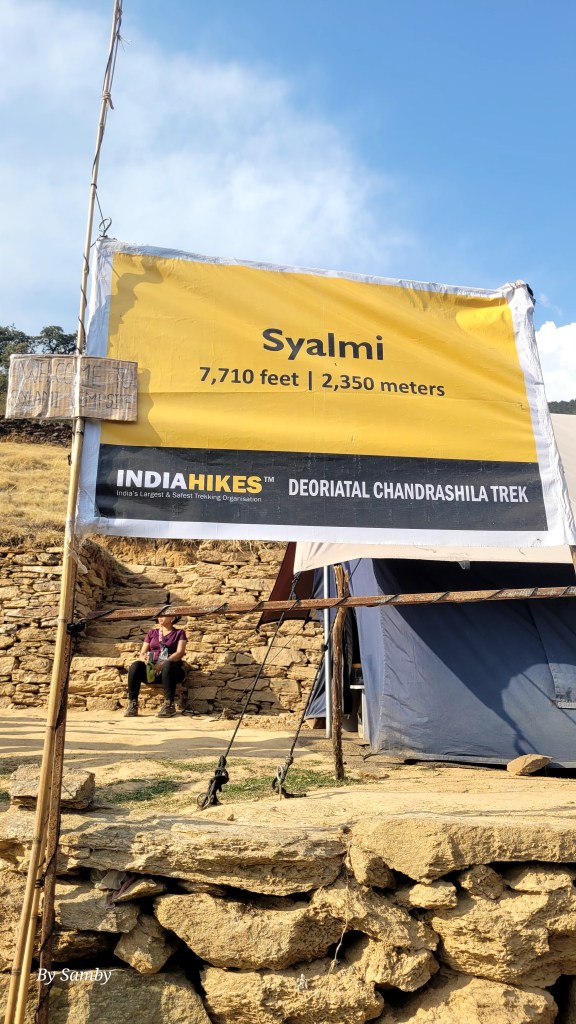
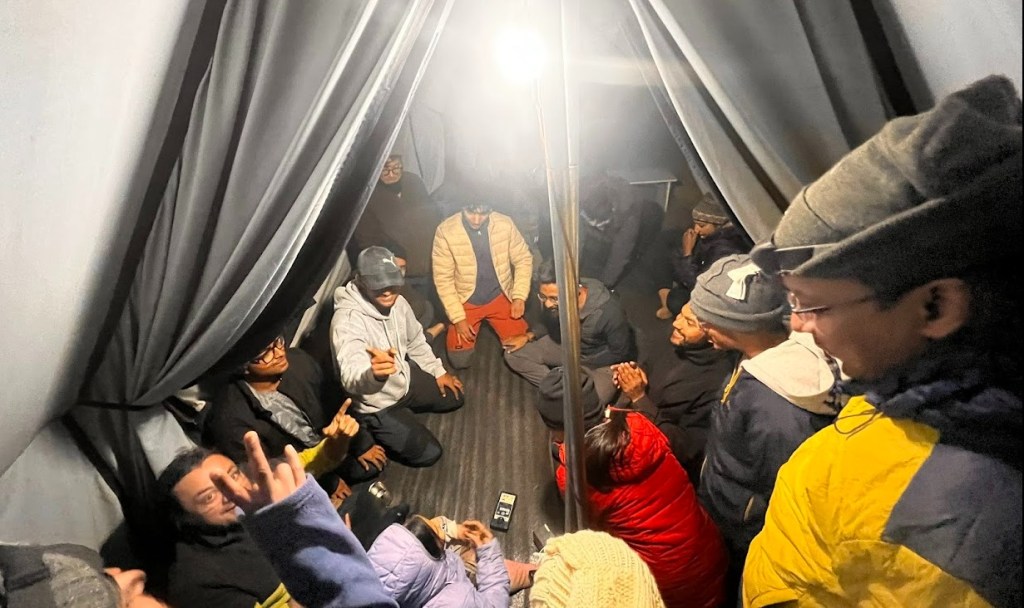
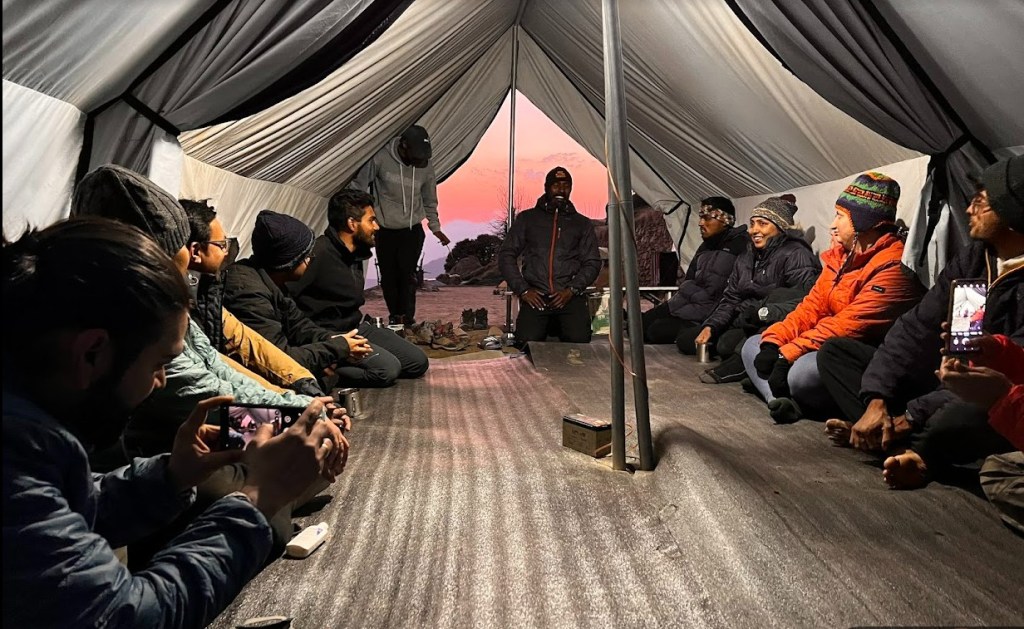
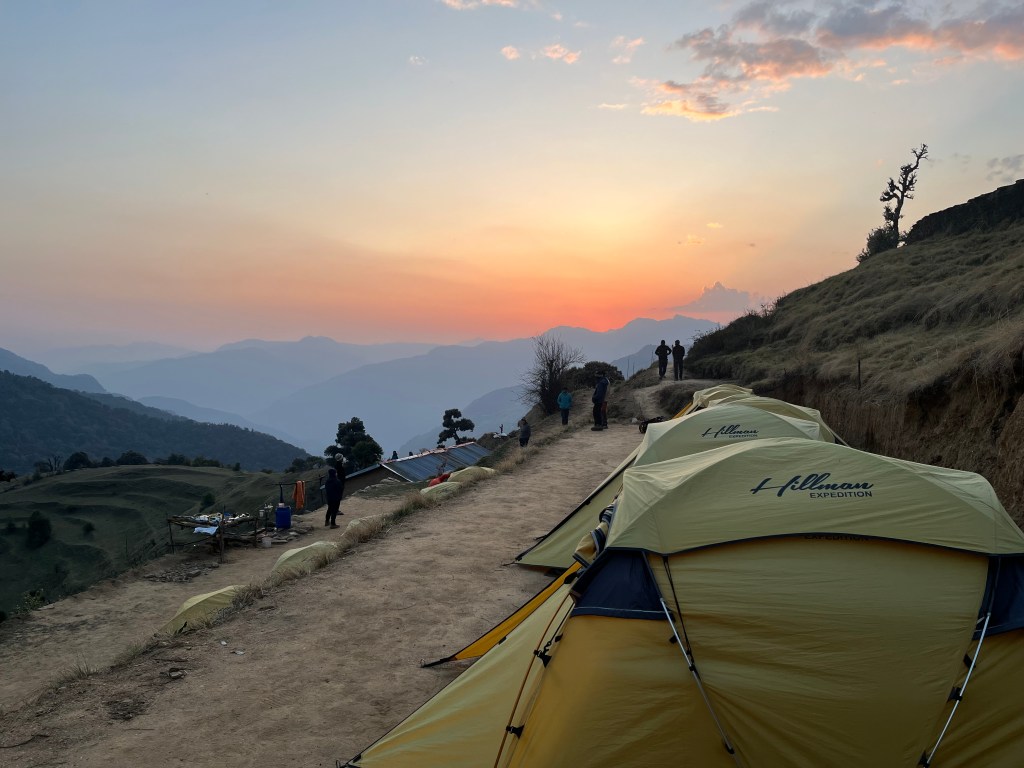
In trekking and camping, the dining tent after dark becomes a space of connection—a hidden treasure amidst the wild. Syalmi camp was no exception. As the evening deepened, we gathered, sharing laughter, playing games, and exchanging stories of the day’s adventures. Strangers became companions, friends grew closer, and in that simple, unfiltered moment, we realized that human connection, storytelling, and shared experiences far outweigh the glow of any digital screen.
Day 4 – Syalmi to Baniya Kund: Into the wilderness- conquering the trail!
April 2nd – The trek from Syalmi to Baniya Kund held a special charm for us, made even more memorable by a surprise announcement from our trek leaders the night before—we would be embarking on a DIY trek*!
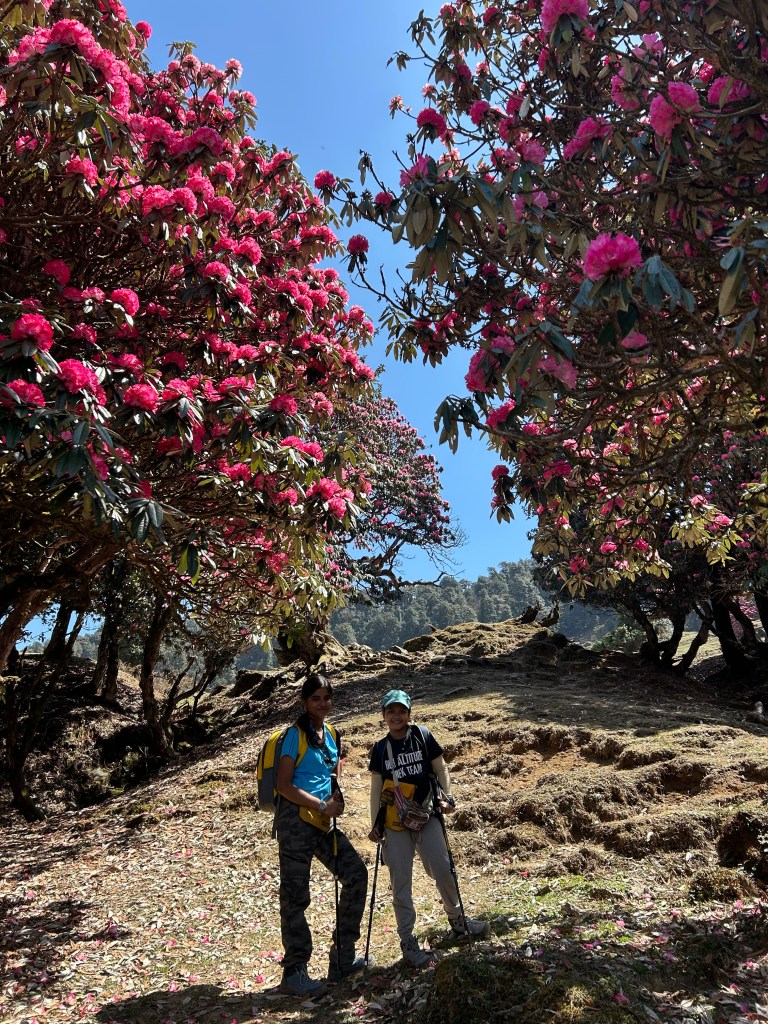
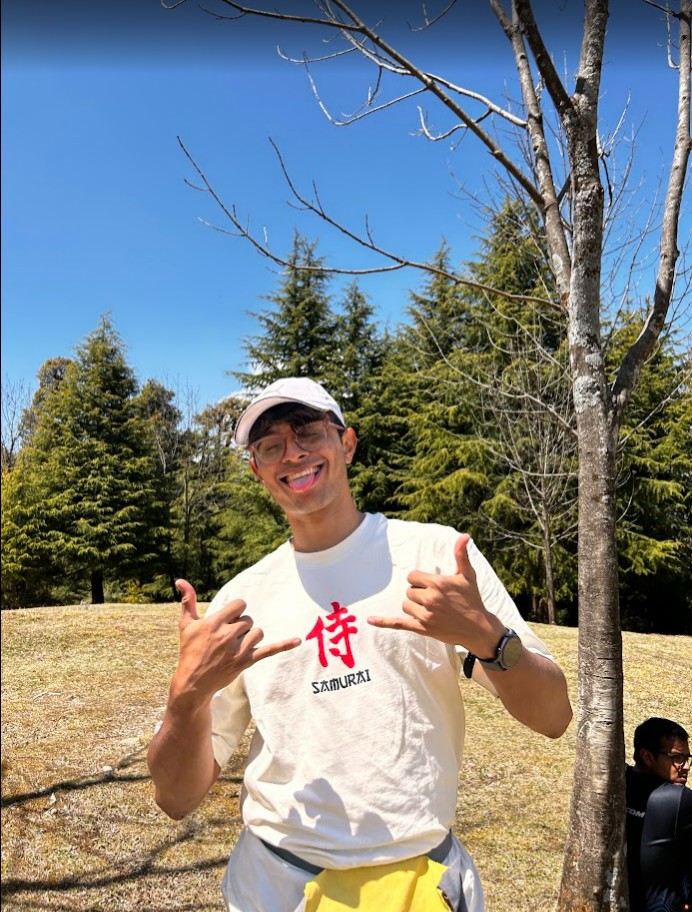

We entrusted our young trailblazers with the lead, while my friend Sambarta stepped into the all-important role of “sweeper”*—making sure no one strayed too far or mysteriously vanished into the wilderness!
*A “DIY trek” stands for a “Do-It-Yourself trek.” Instead of following a pre-organized itinerary with set guides and support, trekkers take on the adventure themselves—navigating trails, managing supplies, and making decisions along the way. It adds an extra layer of challenge and excitement, requiring preparation, independence, and problem-solving.
*In trekking, a sweeper is the person responsible for staying at the back of the group, ensuring that no one is left behind. They keep an eye on slower trekkers, provide assistance if needed, and make sure everyone reaches the destination safely. A sweeper plays a crucial role in group treks, helping maintain the pace while offering support and encouragement to those who might be struggling. It’s a position of responsibility and care—almost like being the guardian of the trail!
We started our journey from Syalmi, heading southeast. The path was steep and led us to Akash Kamini, a lively stream flowing down from Chandrashila. After about an hour, we reached its cool waters and stopped to admire the beauty. Along the way, we saw many different plants and flowers, some of which had healing properties.
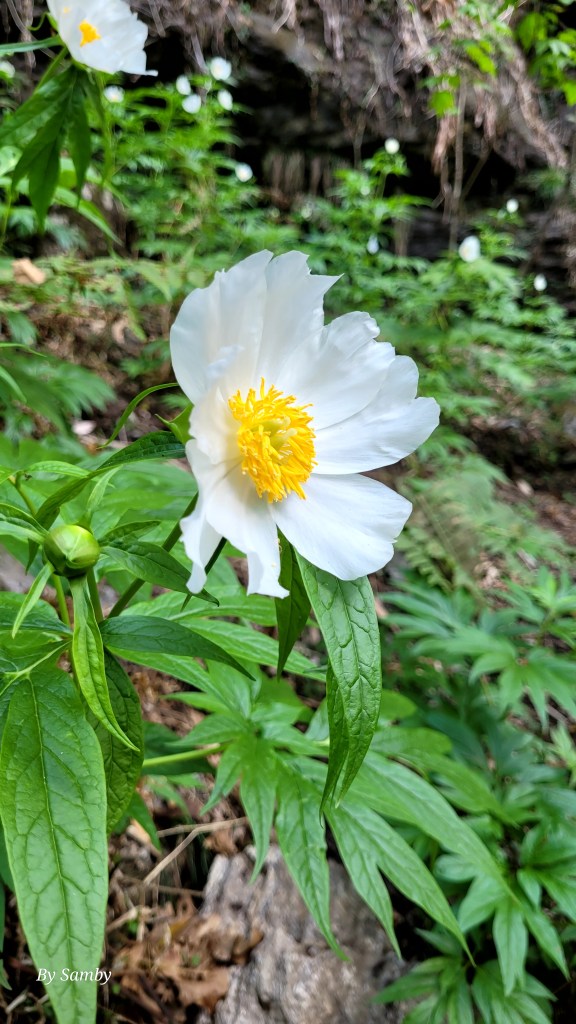
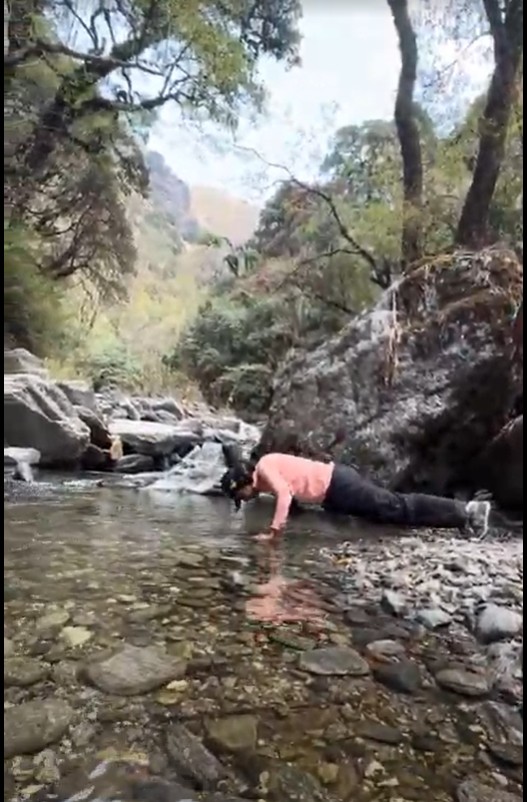
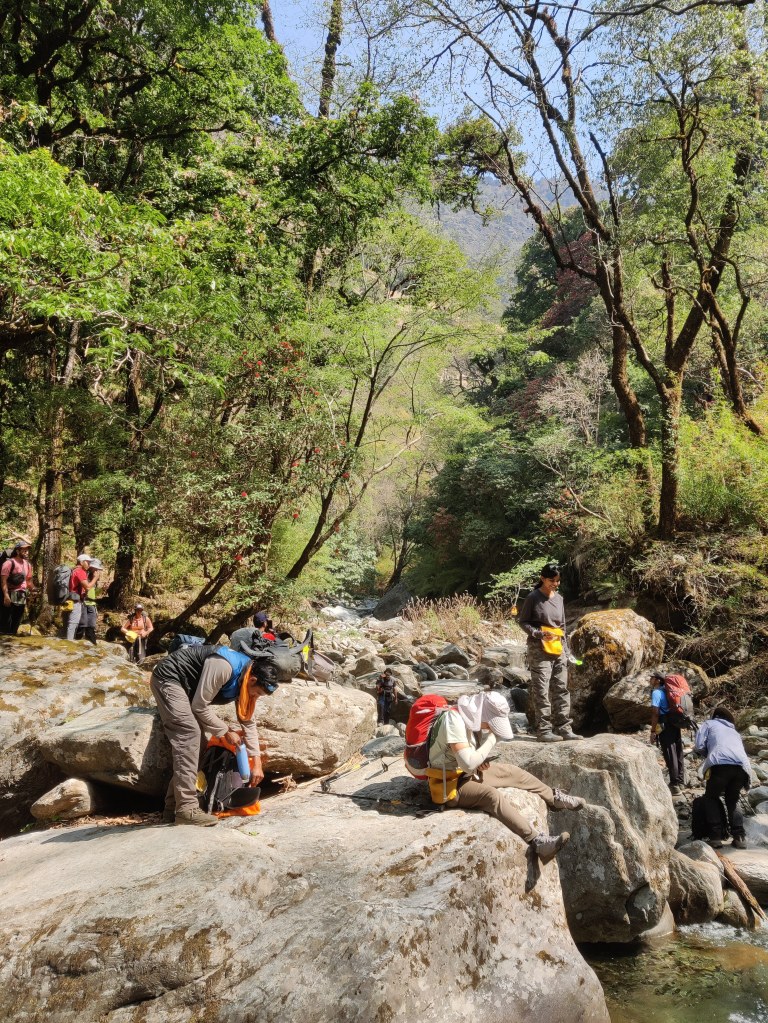
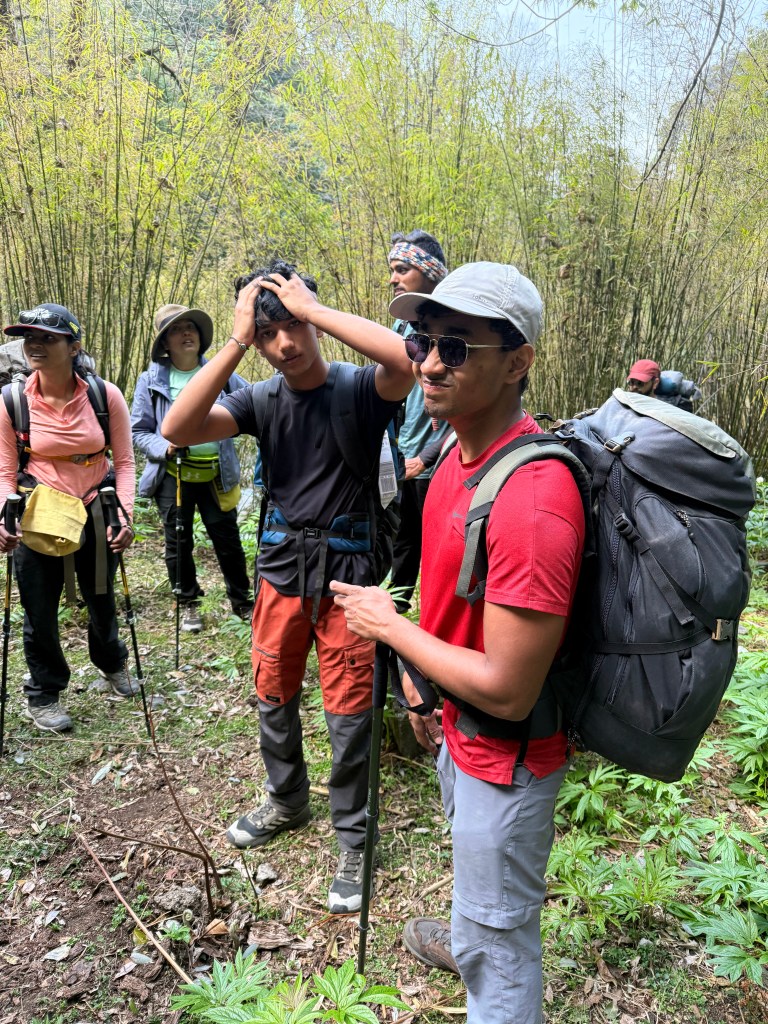
Crossing the tiny bridge, we marched forward like fearless explorers, ready to conquer the looming climb ahead. Our DIY leaders—self-proclaimed masters of jungle navigation—enthusiastically pointed out the way with the confidence of someone who had just watched a survival show. We followed along, wondering whether their expertise was based on actual experience or just a deep admiration for Bear Grylls. Either way, the adventure was on!
With steady steps, we climbed through three winding bends, watching the valley reveal itself in stunning layers. Step by step, we conquered the steep path until we reached Shamkhudi Bugyal—a serene meadow dotted with rustic stone shepherd huts.
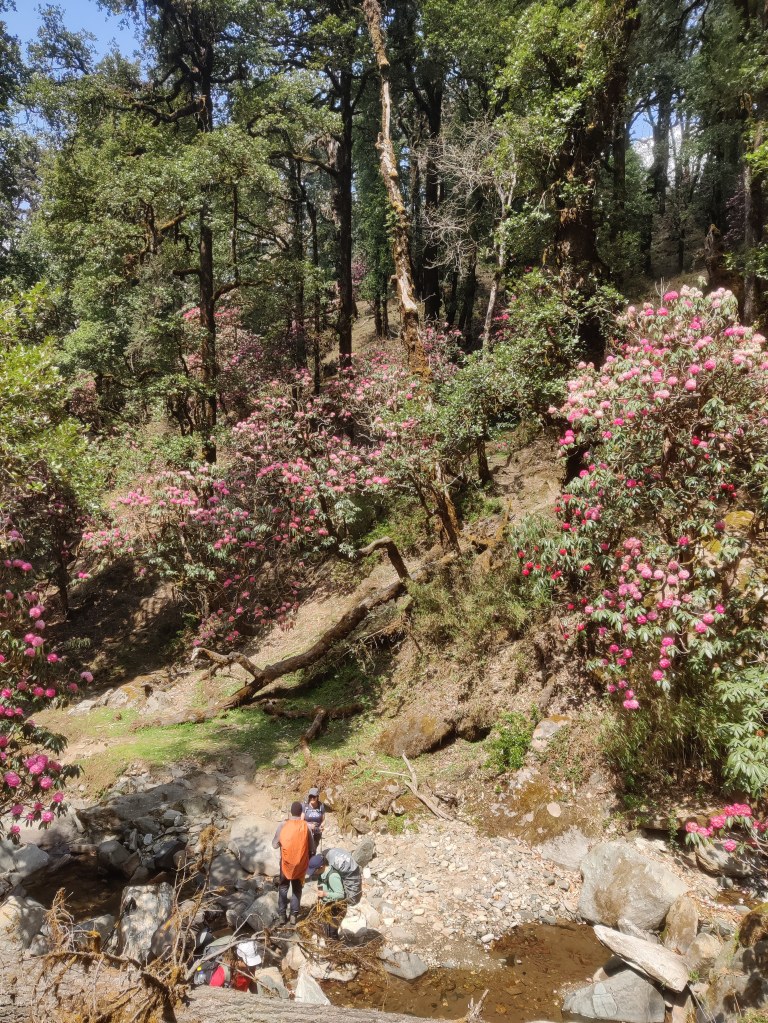
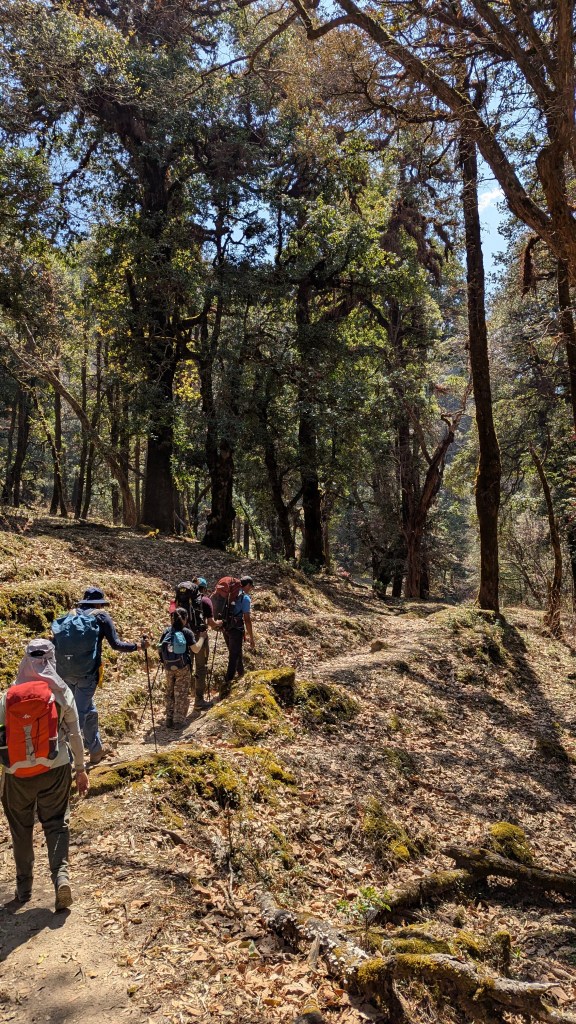
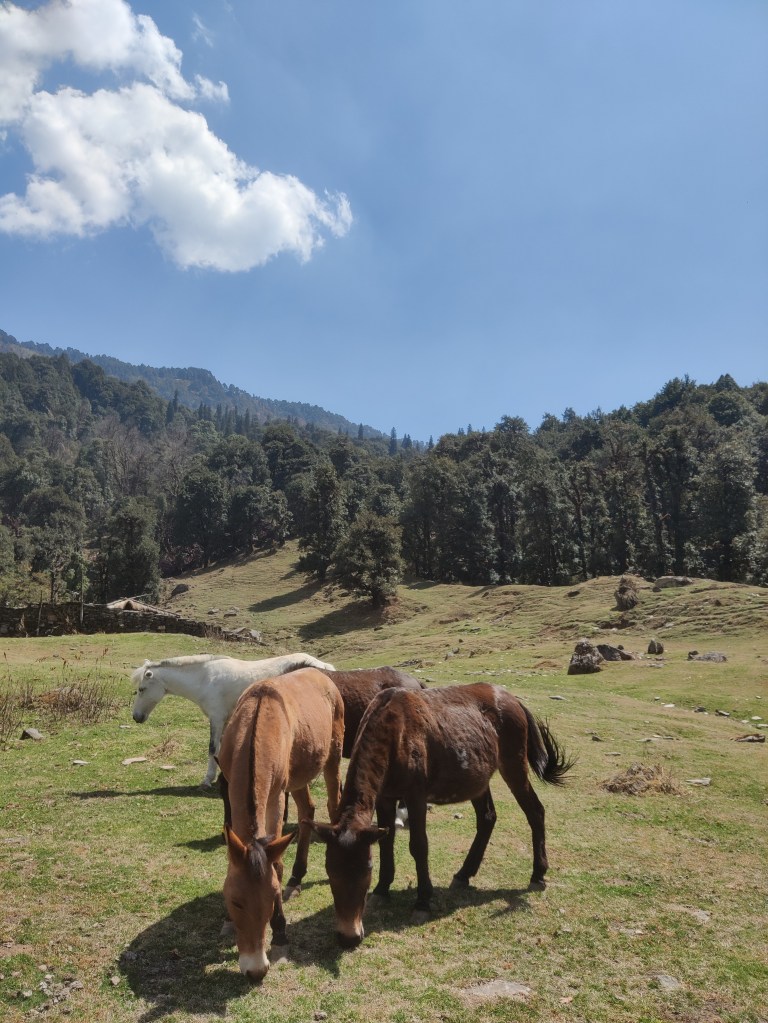
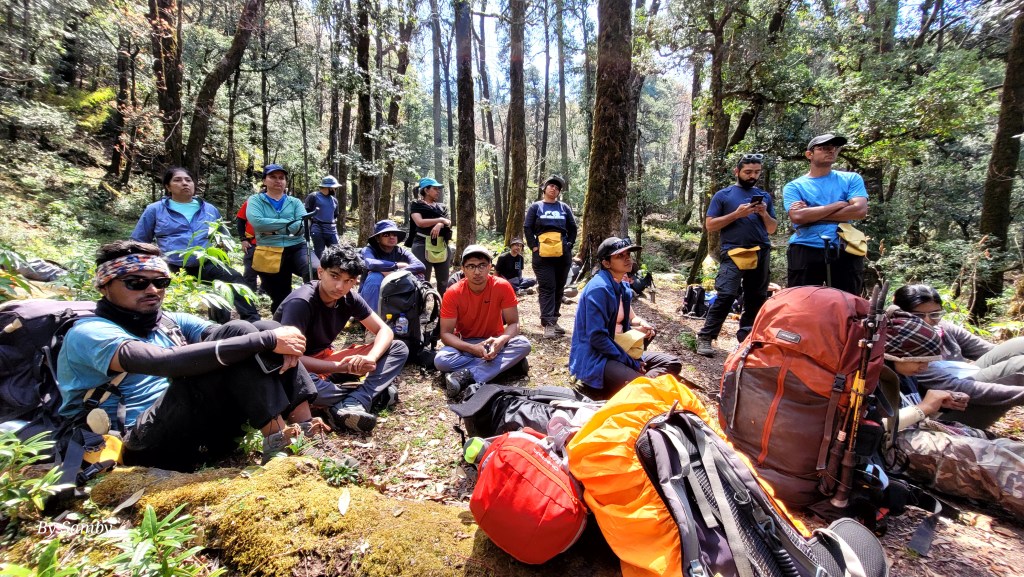
With just a few hundred more meters to go, we finally reached the Baniya Kund campsite, our journey now a treasured memory. Another day in the wild had been conquered, powered by adventure, determination, and the unwavering spirit of exploration.
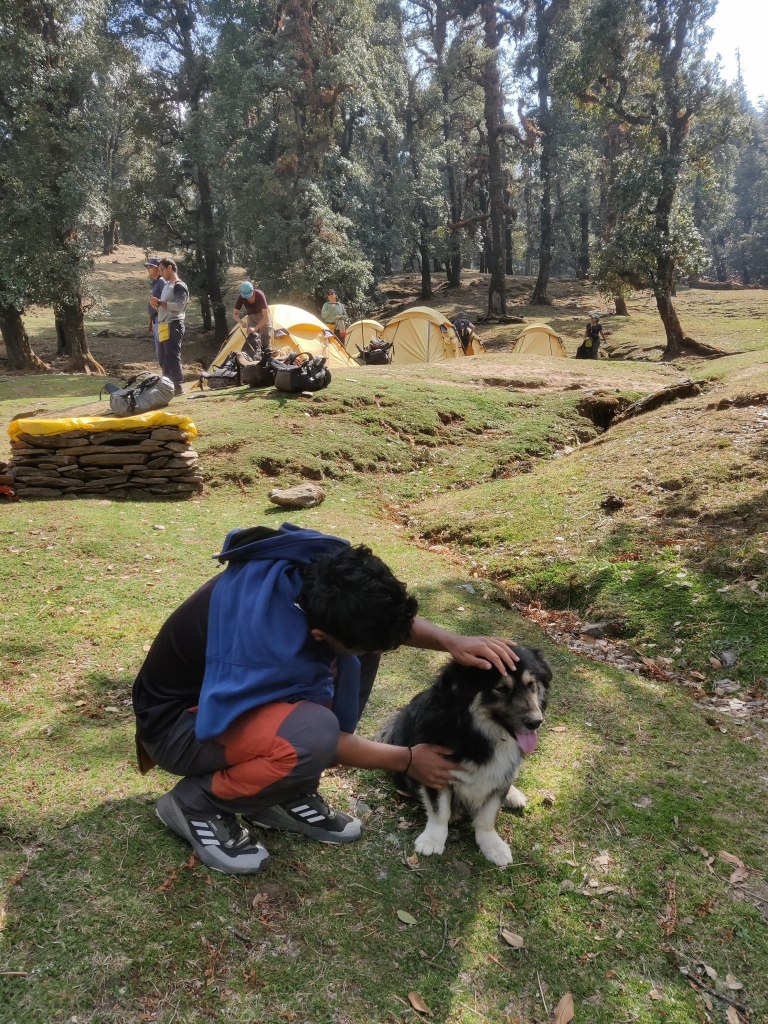
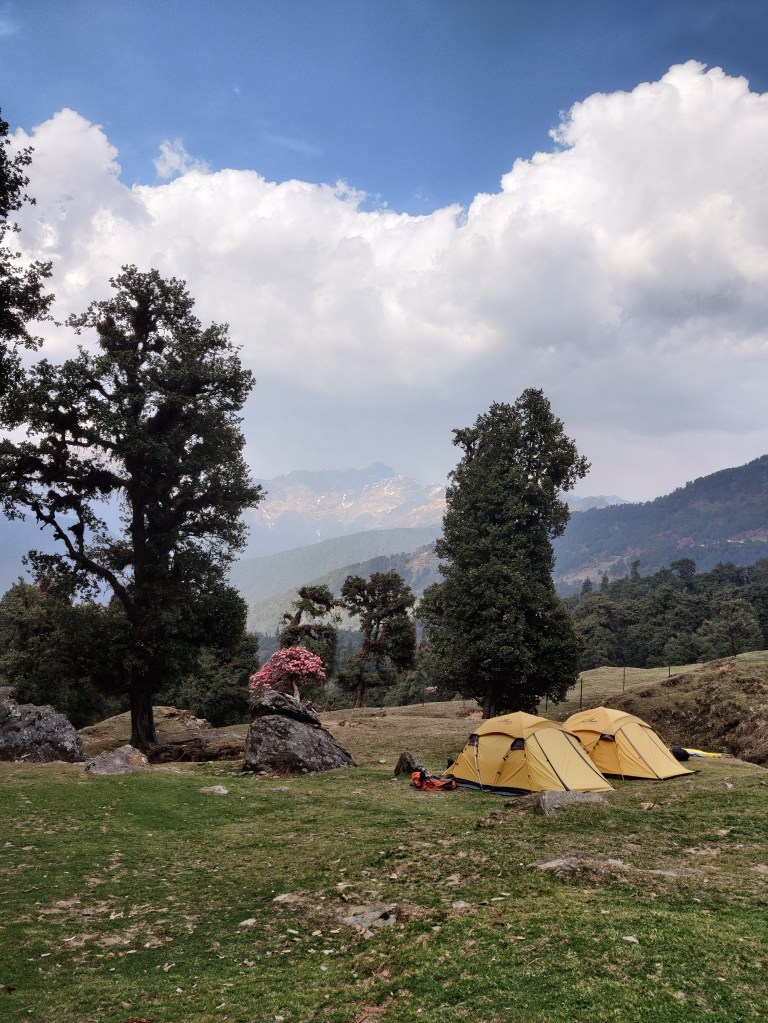
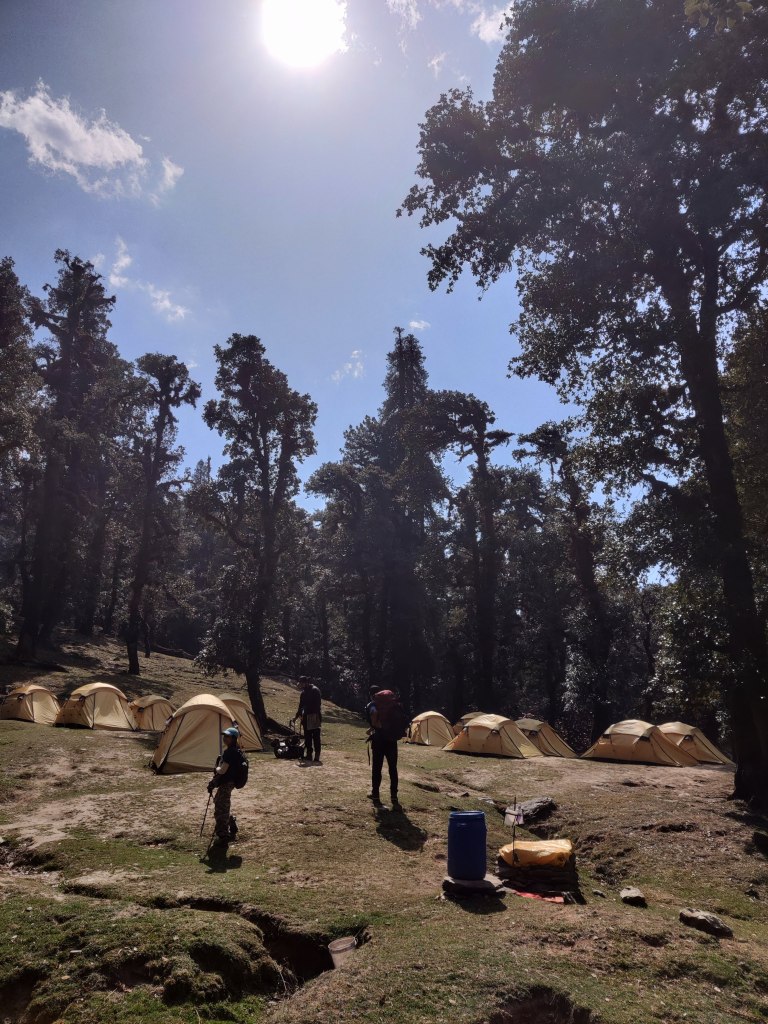
Baniya Kund campsite is a beautiful village in Chopta, Uttarakhand. It is at the entrance of the Kedarnath Musk Deer Sanctuary, making it a great place for wildlife lovers. With green meadows and thick forests around it, this campsite is peaceful and offers stunning views of the Garhwal Himalayas.
Day 5 – Chandrashila Summit: The day we touched The Heaven!
April – 3rd– Summit day is the grand finale of our multi-day trek. The moment when all the effort, preparation and endurance culminate in reaching the highest point of the journey. From BanyaKund it’s a 13 kms distance to cover with an altitude gain from 8520 ft to 12,083 ft. To avoid reflection of intense sun-light at summit, our plan was to start at 3 am from Baniya Kund and have a turn-around* within 10 am.
*In trekking and mountaineering, turn-around time refers to the predetermined point at which climbers must decide to head back, regardless of how close they are to the summit. It’s a crucial safety measure to ensure that trekkers have enough time and energy to descend safely before nightfall or adverse weather conditions set in.
As per plan, we completed our breakfast by 2:30 am and got ready to start the most eventful day in peach dark terrain with our head lamps on. From Baniya Kund campsite, we treaked almost 1.5 km in dark to reach to Chopta Bazar.
The trek from Chopta to Tungnath was accessible via a cemented pilgrim trail. The ascent was steep, winding through relentless hairpin bends, each turn demanding careful negotiation of altitude. Determination fueled our steps—an unshakable resolve to reach Tunganath before 7:30 am.
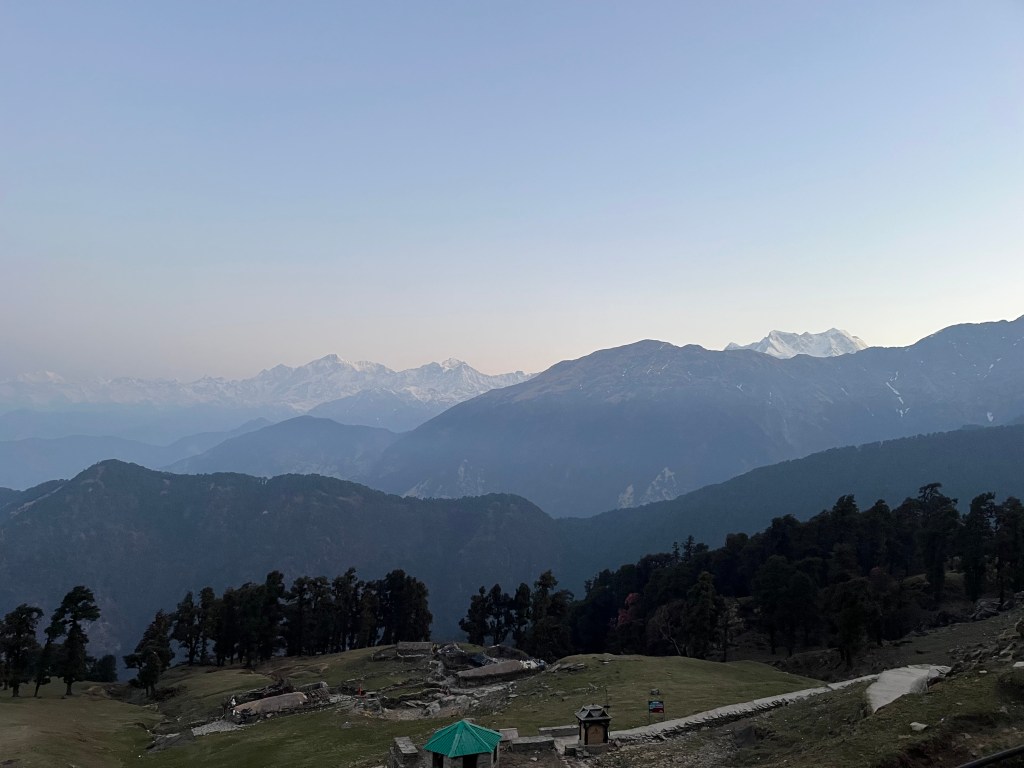


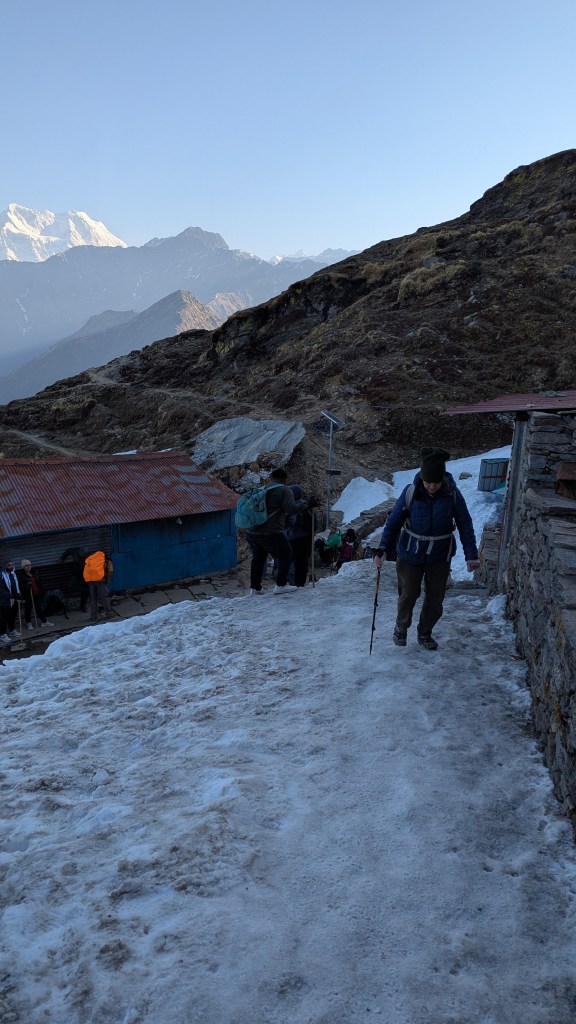
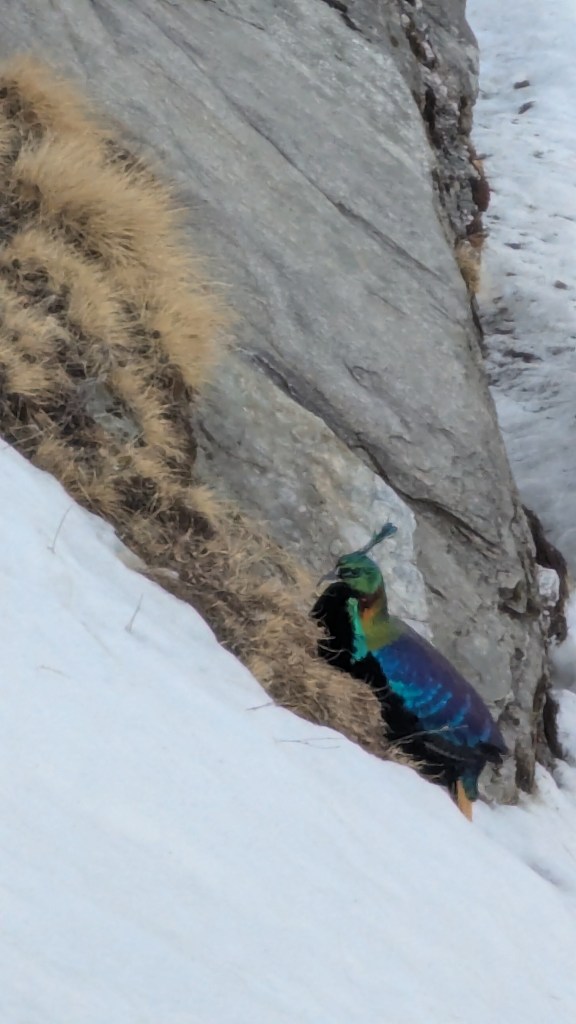
A stunning patch of Birch trees (Bhojpatra) overlooked the valley, home to the graceful Monal and Griffin vulture. Taking the 11th and final turn, we arrived at the revered Tungnath temple.
During winter (November–April), Tunganath temple remains closed due to heavy snowfall, and the idol of Lord Shiva is moved to Shri Markandeya Temple in Ukhimath for worship.
After reaching Tunganath, we took a short break to recharge with light snacks and water. Then, we put on micro-spikes* over our trekking boots, preparing for the climb ahead.
*Micro-spikes are small, lightweight traction devices worn over hiking boots or shoes to provide extra grip on icy or slippery terrain. They consist of metal spikes attached to a flexible harness, which wraps around the sole of your footwear. Unlike full crampons used for technical mountaineering, microspikes are designed for trekking, winter hiking, and trail running on packed snow or ice.
Exhaustion set in, likely from the midnight wake-up and the intense climb to reach the peak on time. My energy faded, my motivation wavered, and the thought of stopping at Tunganath crossed my mind. I considered staying behind while the team continued, but as soon as my trek leaders, teammates, and my dear friend Sambarta heard my doubt, they refused to let me give up.
Their voices lifted me, breaking through the cold, urging me forward. In that moment, I wasn’t just with fellow trekkers—I was with family. They refused to let me give up, believing in me when I doubted myself. That moment stays with me, forever carved into my heart. With renewed determination and their unwavering support, I took a deep breath, steadied myself, and began moving slowly toward the summit.
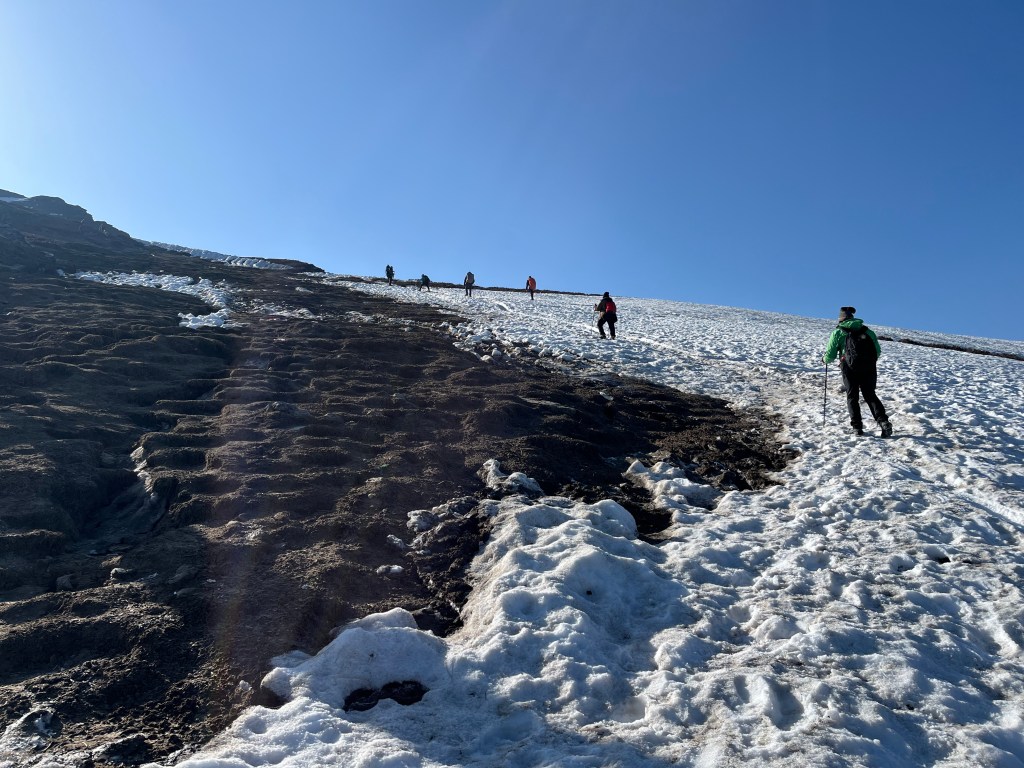
Every step felt heavier than the last, my breath came in sharp bursts, and the unforgiving terrain tested every ounce of my endurance. The summit seemed both tantalizingly close and impossibly far, daring me to push beyond my limits. With sheer determination and the unyielding support of my team, I fought through the fatigue, digging deep into reserves of strength I didn’t even know I had. The micro spikes crunched against the icy trail, each step a small victory, each moment a testament to my willpower. And then—finally—the summit.
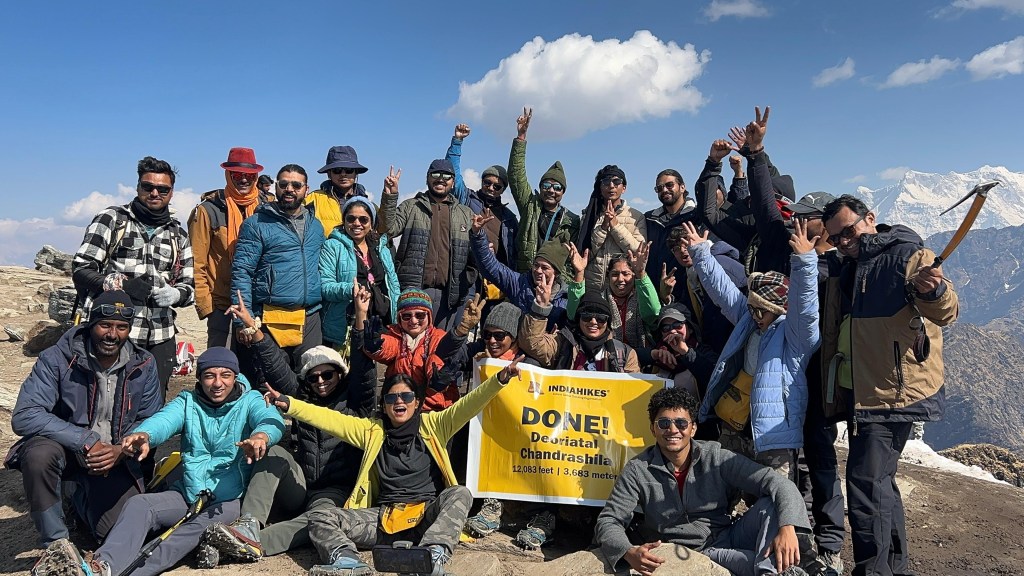
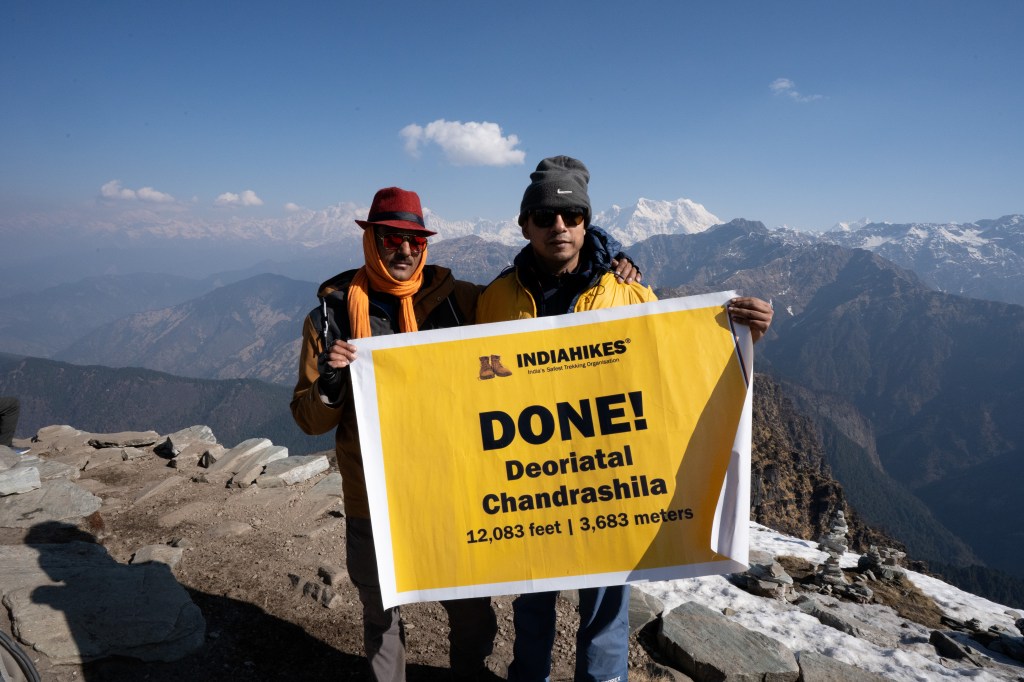
Standing at Chandrashila Peak, surrounded by endless mountains, I felt pure gratitude. The crisp air, towering peaks, and vast sky filled me with a deep sense of peace. Nature’s power was both humbling and uplifting, guiding all who seek its wisdom.

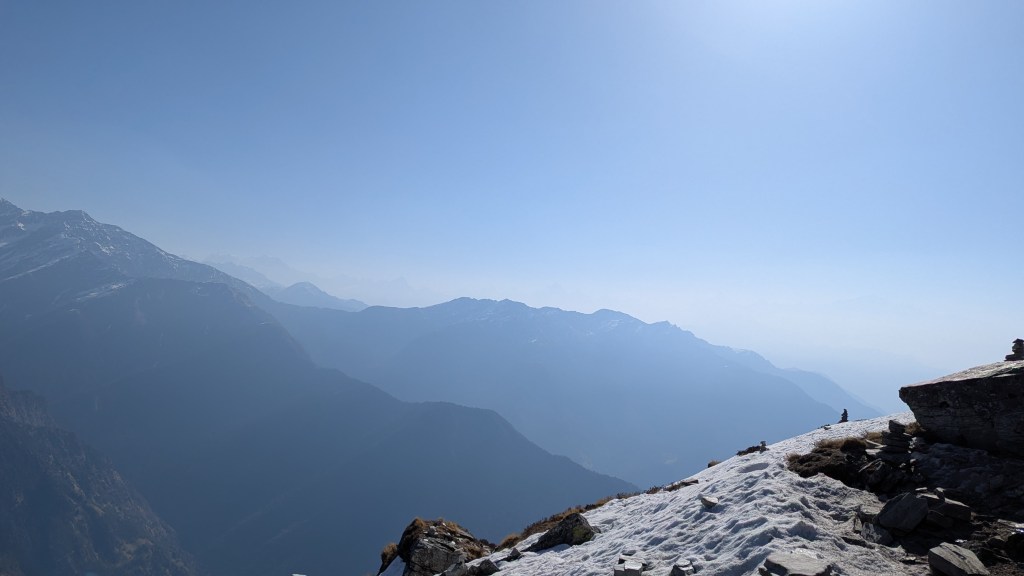
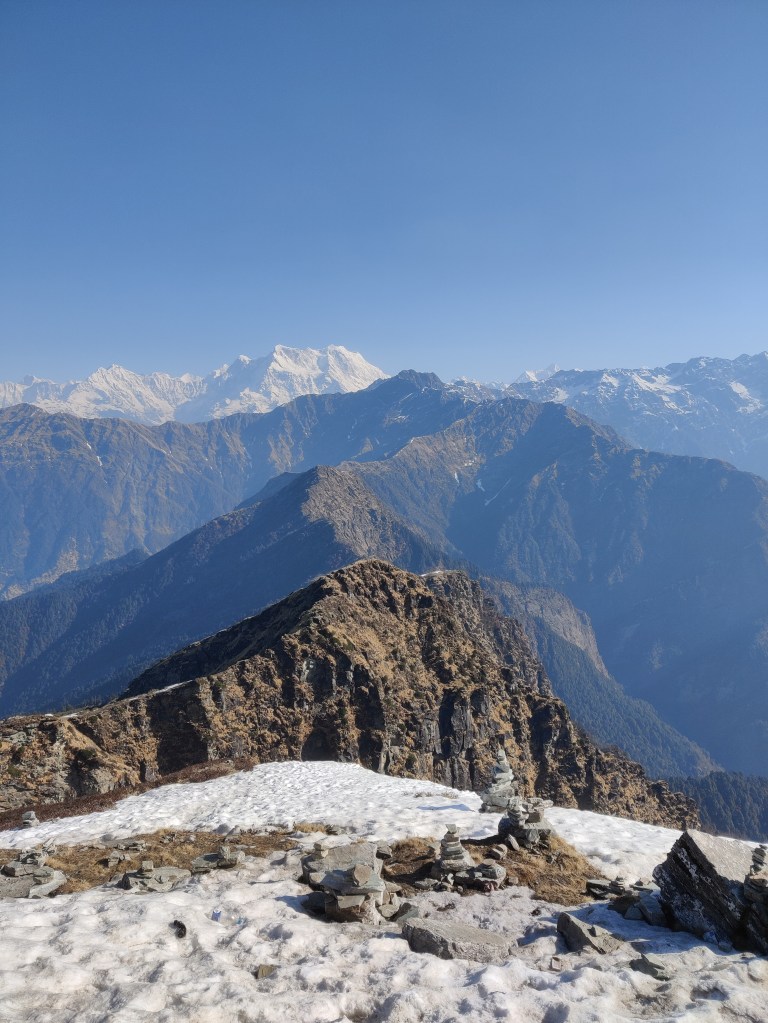
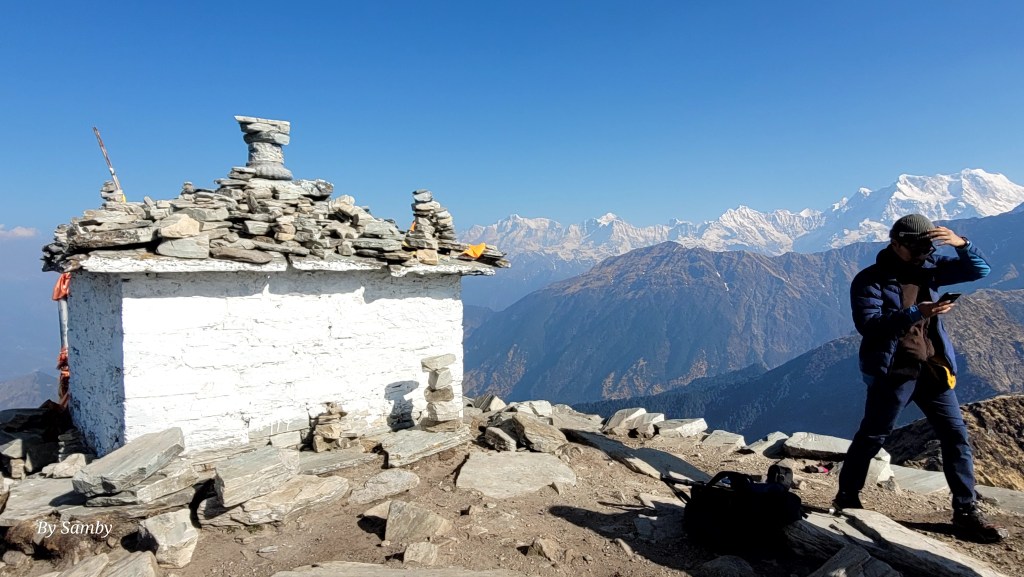
This journey was not just a trek; it was a test of resilience, a lesson in trust, and an experience that will stay with me forever. Over the past five days, I leaned on my team, and they lifted me up—encouraging me when I doubted, supporting me when I struggled, and celebrating every hard-earned step forward. Their camaraderie turned exhaustion into determination and fear into courage.
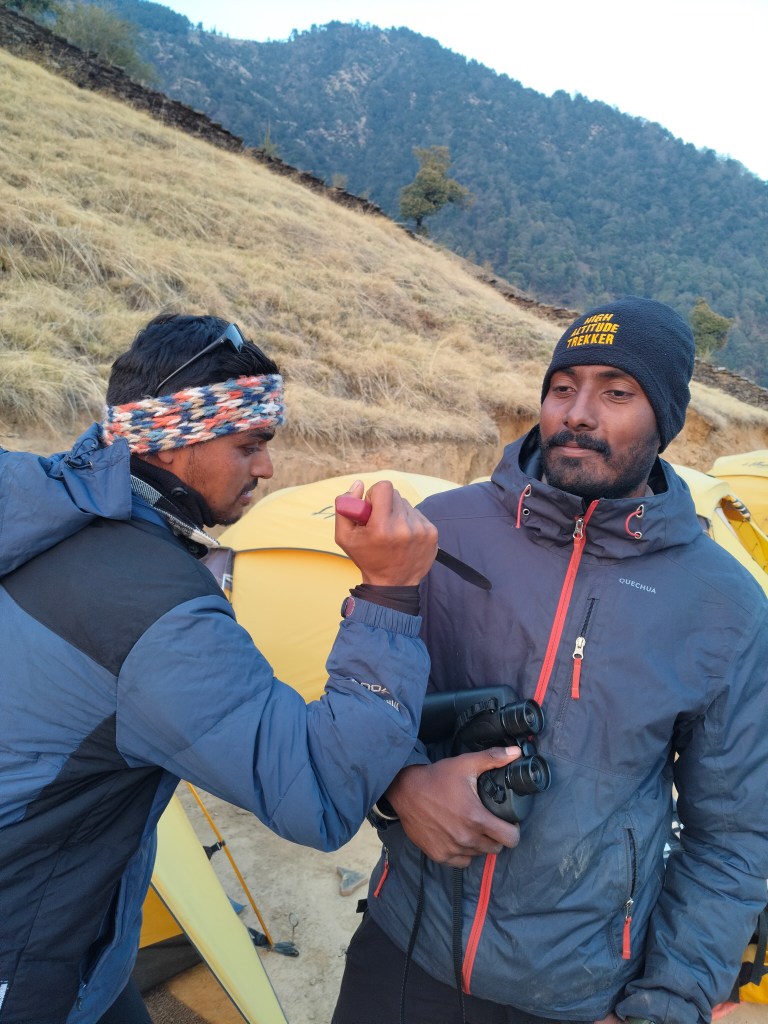
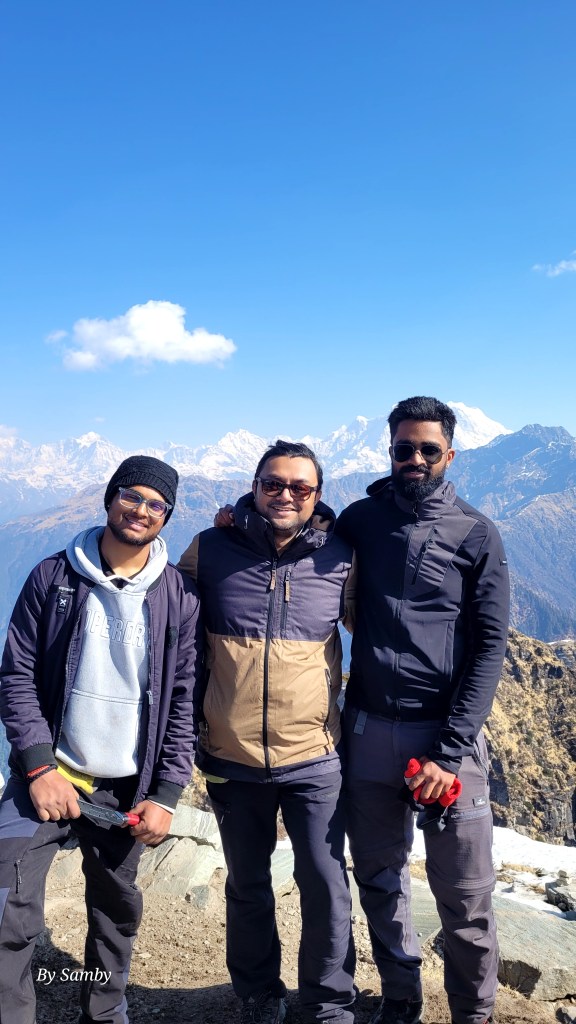
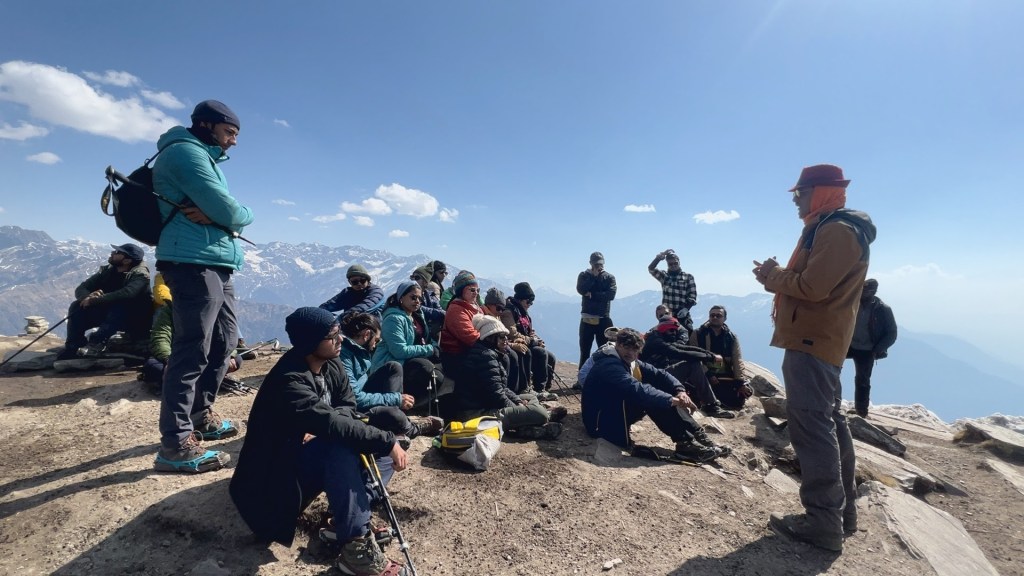
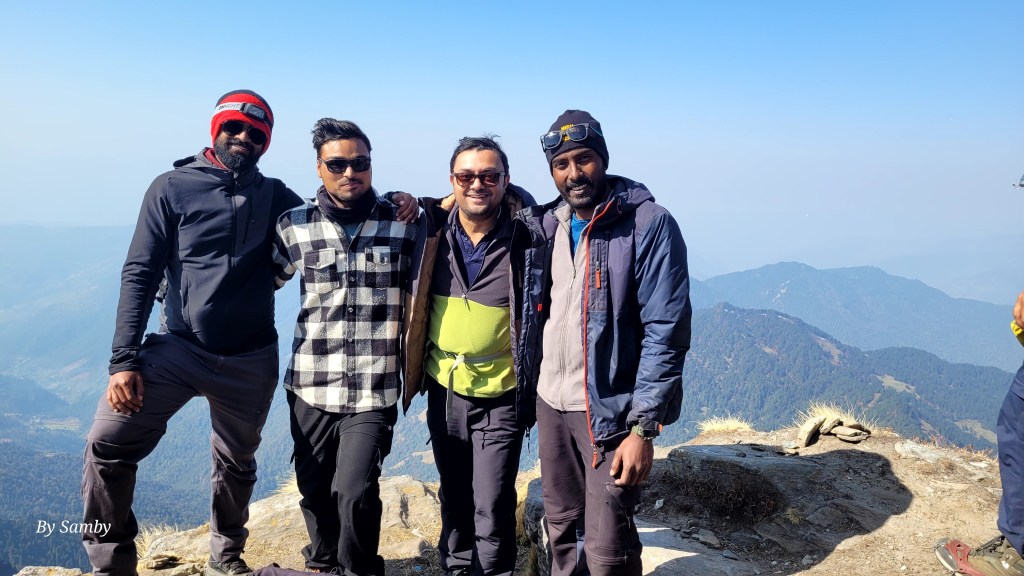
The mountains, the local people, and our dedicated trek leaders taught me invaluable lessons—patience in adversity, respect for nature’s rhythm, and the beauty of simplicity. Every sunrise over the snow-clad ridges, every whispered tale from the locals, and every challenge conquered has added a new perspective to my soul.
Looking back, this trek was more than just reaching the summit; it was about finding strength within, embracing the unknown, and learning that sometimes, the greatest journeys are not just measured in kilometers but in the growth they inspire.
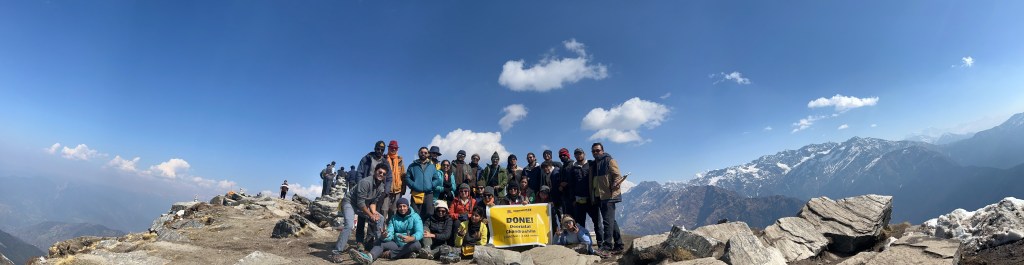
With a heart full of gratitude and a mind enriched with experiences, I take my leave—but the mountains will forever call me back.
Gratitude: “A huge thank you to ‘Indiahikes‘ and my incredible team members for their unwavering support throughout this journey. Your encouragement, companionship, and shared experiences made this trek unforgettable. I’m also grateful for the stunning pictures you captured—they helped bring my story to life, preserving these precious memories forever.”


 Pratik's Journey Journal
Leave a reply to Pankaj Dutta Cancel reply